


After Cosmetology School: How to Get Licensed, Hired, and Career-Ready
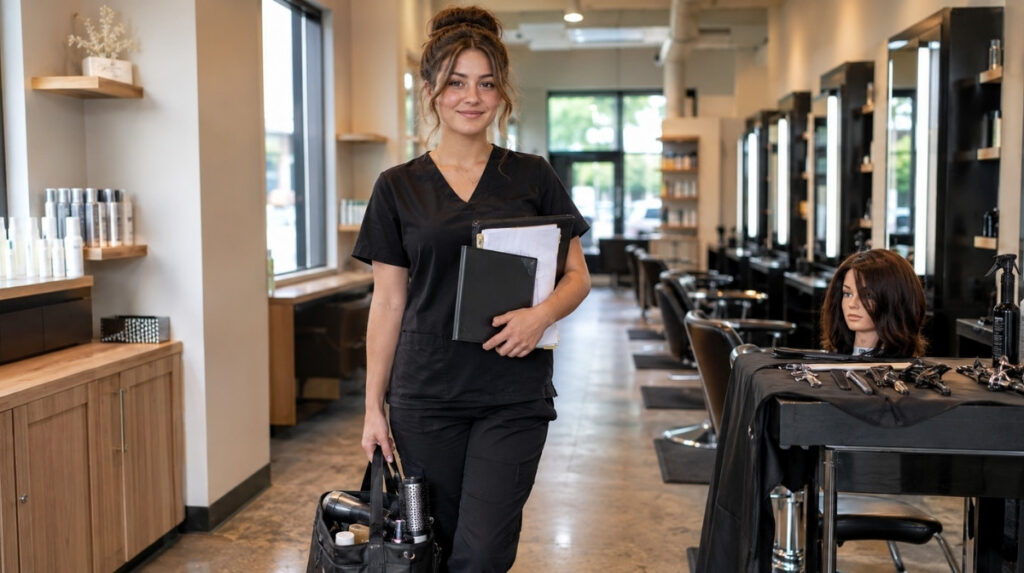
The day you walk off the student salon floor for the last time is a complete mix of emotions. You are excited because you finally reached your required clock hours and packed up your student kit, but then the real-world pressure starts to show up. You look at a blank resume, think about paying clients, and wonder how hard it will be to get a job after cosmetology school when experienced stylists already seem so far ahead.
That reaction is normal. Every working stylist, salon owner, platform artist, and beauty educator had a first week, a first interview, and a first nervous client. The key is not pretending you know everything. It is learning how to turn your school training into a practical career plan. Your state board preparation is not just a diploma moment, it is the base that helps you move into salon work, specialty services, independent business, education, or other beauty career paths with a clearer sense of direction.
Key Takeaways
- A cosmetology license can cover several areas of beauty work, including hair, nails, makeup, waxing, and some skin-related services, but your exact limits always depend on state scope-of-practice rules.
- Beauty income is not always captured by a single hourly wage because tips, retail sales, commission structure, booth rental, self-employment costs, and repeat clients can change what you actually take home.
- If you make, repackage, distribute, or sell cosmetic products, federal MoCRA rules may affect your business, but your duties depend on your role, your label, your product type, and whether an exemption applies.
- The Interstate Cosmetology Licensure Compact is moving forward in participating states, but multistate license applications are not fully active yet.
How Far a Cosmetology License Can Take You
One of the strongest advantages of cosmetology training is that it does not lock you into one narrow job forever. Your education introduces you to a legal scope of practice, which means the services your state allows you to perform once you are properly licensed. That scope can be broad, but it is never something to guess about. A service that is allowed for a cosmetologist in one state may require extra training, a separate license, or a different credential in another state.
When people talk about finding dozens of careers with a cosmetology license, they are usually talking about how flexible the field becomes once you stack technical skill, people skills, product knowledge, and business habits together. If you look into what careers can you have with a cosmetology license, including offline and remote options, you will see that your path does not have to end at one salon chair. You can move through salon services, brand education, management, product support, beauty content, event styling, or long-term ownership.
Daily Services That Build Your Career Options
To understand your cosmetology job opportunities, you have to understand what your license actually lets you do. In many states, cosmetology education includes hair cutting, styling, coloring, chemical services, basic nail care, makeup, waxing, and some esthetics-related services. The exact boundary is always set by your state board, so you should check your local rules before advertising any service that could sit near the edge of your scope.
Your core training gives you the foundation to cut, color, style, and chemically alter hair. You learn how hair reacts to products, heat, color, texture services, and damage repair. That is what allows a licensed cosmetologist to move from simple trims to more advanced services like corrective color, dimensional blonding, smoothing treatments, or special occasion styling when those services fall within state rules.
You may also wonder, can you do nails with a cosmetology license? In many states, cosmetologists can perform manicures, pedicures, and standard nail services without getting a separate nail technician license, as long as those services are included in the cosmetology scope. The same caution applies to makeup, brow shaping, waxing, and skin services. Some basic services may be allowed, while advanced skin treatments, medical aesthetics, lasers, microneedling, deeper chemical peels, or certain lash services may require separate credentials or extra state approval.
This is why it helps to understand your scope before choosing a specialty. If you are comparing nails, lashes, skin, and makeup work, a guide like understanding your cosmetology license scope can help you ask better questions before you invest in tools, classes, or marketing. The safest professional habit is simple: verify the service with your state board before you offer it for pay.
The job market is also steady enough to take seriously. According to the U.S. Bureau of Labor Statistics (BLS), employment for barbers, hairstylists, and cosmetologists is projected to grow by 5% from 2024 to 2034, with about 84,200 openings each year. BLS also reports that the top 10% of hairdressers, hairstylists, and cosmetologists earned more than $33.76 per hour in May 2024. That wage data includes tips where reported, but it does not include self-employed workers, which matters in a field where booth rental and independent work are common.
Choosing a Specialty Without Starting From Zero
After graduation, you may discover that one part of the industry fits you better than the rest. If you like short hair design, fades, clipper work, beard shaping, and traditional shop culture, a cosmetology to barber crossover path may be worth researching. Many states offer a way for licensed cosmetologists to earn barber credentials without repeating every hour they already completed. Those pathways usually focus on the barber-specific training and services required by that state.
If you enjoy skin services, spa environments, waxing, makeup, or facial treatments, you may eventually look at esthetics training or another state-approved credential. A cosmetology license may allow some basic skin-related services in many places, but medical spa services, device-based treatments, advanced peels, lasers, and clinical procedures often fall outside a basic cosmetology scope. This is not an area where you want to rely on guesses, social media advice, or what another salon says they are doing.
Travel-based work is another option once you have confidence and experience. Cruise ship salons and spas may hire hairstylists, nail technicians, beauty therapists, and spa workers, but requirements vary by employer. Some roles may ask for prior salon experience, a strong portfolio, technical versatility, or training that matches the services offered onboard.
Local laws can also change the way professionals work. In Arkansas, lawmakers passed Act 964, which requires warning labels for certain hair relaxer products sold in the state when they contain carcinogens or reproductive toxicants. Updates like this show why beauty professionals need to keep up with both licensing rules and product safety rules, especially when chemical services or retail products are part of their work.
What Beauty Income Really Depends On
One of the biggest worries after graduation is money. You may wonder whether cosmetology jobs salary numbers are strong enough to cover bills, student costs, transportation, supplies, and everyday life. If you only look at basic online wage calculators, the numbers can feel discouraging. The problem is that beauty income is often more layered than a flat hourly rate.
Your cosmetology yearly salary depends heavily on your pay structure. Some salons use hourly pay. Others use commission, team-based pay, hybrid systems, or booth rental. If you rent a chair or suite, you may have more control, but you also have business costs. You need to think about product expenses, taxes, booking tools, insurance, cancellations, tips, retail commission, service pricing, and how often clients return.
The American Association of Cosmetology Schools (AACS) 2026 earnings survey, prepared with Azurite Consulting, points to a gap between standard income tracking and what some licensed beauty professionals report earning. The survey suggests cosmetology and esthetics earnings may be around 1.3 to 1.4 times higher than IRS-reported income data alone indicates. It also reports a 40-hour-normalized annual income estimate of $54,220 for respondents licensed in 2014 or earlier.
That survey should be used carefully because it is an industry survey, not a government wage table, and it combines cosmetologists and estheticians. Still, it supports a useful point: income in this field can come from more than one place. A stylist may earn from services, gratuities, bridal work, hair extensions, premium color, retail product recommendations, and repeat-client packages.
To improve how much you make from cosmetology, client retention matters. A stylist who books a smaller number of higher-value color clients and sends them home with the right maintenance plan can often build a stronger business than someone rushing through low-priced services with no rebooking system. Long-term earning power comes from consultation quality, sanitation trust, pricing confidence, technical consistency, rebooking habits, and the ability to turn one good appointment into a lasting client relationship.
Getting Your First Salon Job After School
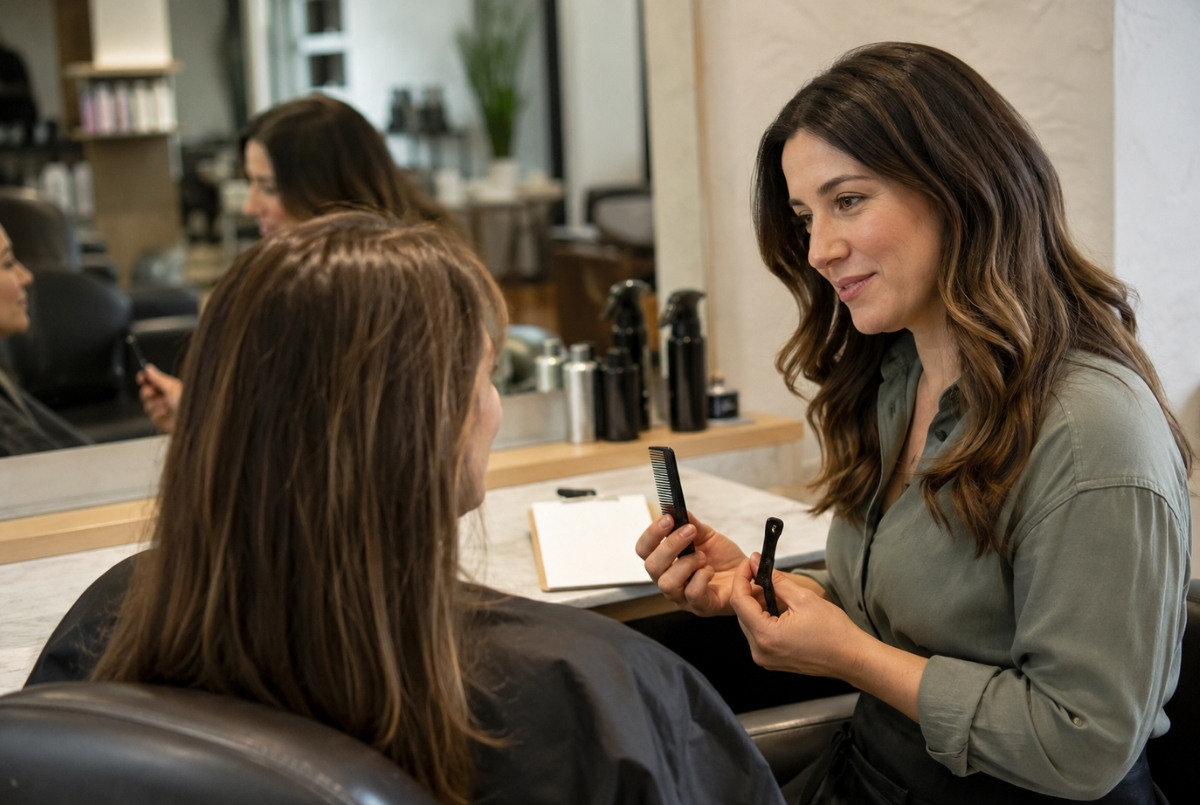
Looking for cosmetology jobs hiring for freshers can feel intimidating when you do not have years of commercial salon experience. The good news is that many salon owners are not expecting a new graduate to act like a senior stylist. They are usually looking for reliability, coachability, safe habits, a clean attitude, and a foundation they can train.
When writing a cosmetology resume with no experience, your student salon work is not empty space. Treat your clinic floor hours like practical experience. List the types of services you performed under instructor supervision, the sanitation procedures you followed, the client consultations you practiced, and the products or tools you used. If you tracked guest numbers, rebooking practice, retail conversations, or service categories, include those details in a clean, easy-to-scan way.
Your license status should be clear near the top of the resume. If your license is active, write something direct such as: Licensed Cosmetologist, State Board of [Your State], License #[Number], Active. If you have graduated but are still waiting for exam results, final approval, or state processing, say that accurately. Do not imply you are licensed before your state authorization is active.
Group your technical skills into one section. This could include haircutting, blowouts, color application, chemical relaxing, special occasion styling, sanitation procedures, basic nail services, or other services you are trained to perform. Next to that, list business and client-service skills such as booking software, front desk communication, consultations, product knowledge, retail support, time management, and rebooking.
When describing your cosmetology job description experience, use professional service language. Instead of saying “washed and cut hair,” explain that you performed client consultations, prepared guests for services, maintained infection control standards, supported chemical service setup, and completed supervised salon floor tasks. If you want more guided training, an assistant role or cosmetology apprenticeship-style path can help you transition into salon life while learning from experienced stylists.
Licensing Steps That Protect Your Career

You cannot legally perform paid licensed beauty services until your state gives you the proper authorization. That may be an active license, temporary permit, apprentice registration, or another approved status depending on state rules. Right after graduation, your priority is to finish the application process, confirm that your school records were submitted, pay required fees, and pass the exams your state requires.
To prepare for testing, you can use a cosmetology state board exam prep guide for written and practical exams to review infection control, safety, chemical services, kit preparation, and test-day expectations. A guide can help you study more clearly, but your actual exam result still depends on your preparation, state rules, and testing performance.
Depending on where you live, your school may send your graduation records directly to the state board. In other states, you may need to request records, upload proof, or complete part of the process yourself. If you later move, apply for transfer, or need official clock-hour records, start with your school’s administrative office while the school is operating.
Processing timelines vary widely. Some boards update online license lookups quickly, while others take longer because of exam reporting, background checks, paperwork, or certificate processing. The safest rule is to avoid paid licensed services until your legal authorization is active under your state’s rules.
If you may move later, a guide on cosmetology hours by state, exam rules, and license transfer basics can help you compare training hours, exams, renewal periods, continuing education, and transfer options. The Interstate Cosmetology Licensure Compact is being implemented across participating states, but it is not fully active for multistate license applications yet. Before assuming you can work across state lines, check the official compact site and the licensing board in the state where you want to work.
Working Independently Without Ignoring the Rules
Many new graduates search for cosmetology jobs remote or wonder whether they can work from home. The internet has created more beauty-adjacent roles, but hands-on licensed services still have legal limits. You cannot cut, color, wax, or perform nail services through a screen, but your background can support digital work such as beauty copywriting, online product education, social media support for hair brands, client care for professional product lines, or virtual consultations where allowed.
If you want to run a hands-on beauty business from a residential space, you need to check state board rules, local zoning, business licensing, insurance, inspection requirements, sanitation standards, plumbing rules, ventilation, and any city or county restrictions. A home-based salon may feel casual, but the rules are usually formal. In Arkansas, salon and establishment requirements are handled under state cosmetology rules, and any operation should be checked against the current board requirements before opening.
You may also ask, can I open a salon without a cosmetology license? In many places, a person can own or invest in a salon business without personally holding a cosmetology license. However, that does not allow the owner to perform licensed services on clients. The salon itself usually needs the correct establishment license or facility approval, and every person performing licensed services must have the proper authorization for the work they are doing.
Product businesses have a different set of rules. Many creative graduates want to sell hair oils, private-label cosmetics, custom beauty products, or repackaged items online. Once you move into making, processing, repackaging, distributing, or selling cosmetics, you may have federal responsibilities under the FDA’s MoCRA overview. Depending on your role, you may need to understand facility registration, product listing, adverse-event reporting, labeling, recall authority, records access, and safety substantiation.
Legal analyses of MoCRA compliance also emphasize that cosmetics companies need to pay attention to registration, labeling, safety, and manufacturing obligations. That does not mean every small creator has the exact same burden. Some small-business exemptions exist, but they depend on more than sales volume alone, and certain product categories are excluded from those exemptions. Before selling homemade, repackaged, or private-label cosmetics, treat it like a regulated product business, not a casual side project.
Moving Into Beauty Education Later
When you think about your career, do not only picture the first salon job. Think about the kind of professional life you want ten or twenty years from now. Standing behind the chair all day can be rewarding, but it can also be physically demanding. That is why some experienced beauty professionals eventually move toward teaching, training, or mentoring.
If you want to know how to become a cosmetology instructor, you need to check the state where you plan to teach. Instructor rules vary widely. Some states require work experience, while others focus on active licensure, instructor training hours, registration, and supervised training. In Arkansas, instructor training rules require an instructor trainee to hold a current Arkansas license in the relevant field, register as an instructor trainee, complete instructor training of not less than four months and 600 hours, and train under a licensed instructor.
A teaching role can offer a different rhythm from full-time salon service, but it should not be described as automatic stability. According to the BLS profile for career and technical education (CTE) teachers, the median annual wage for CTE teachers was $62,910 in May 2024. Your exact cosmetology instructor salary depends on the employer, school type, schedule, location, benefits, and state requirements. For professionals who enjoy explaining techniques and helping beginners grow, education can become a meaningful long-term path in the beauty industry.
Start Planning Your Beauty Career With Career Academy of Hair Design
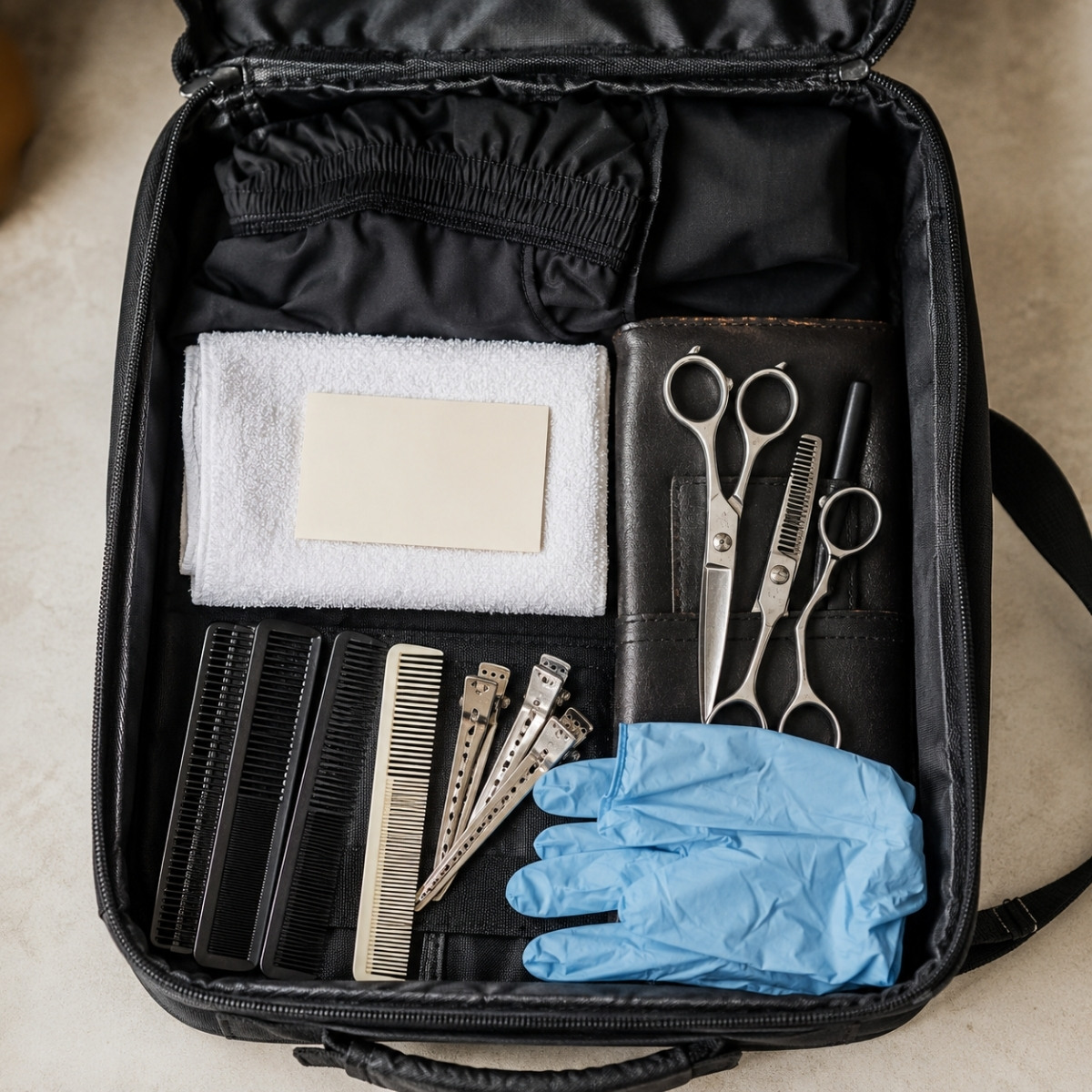
Your license opens the door, but your training shapes how confidently you walk through it. Career Academy of Hair Design, offers beauty training in Arkansas for students who want to build a professional foundation in the industry. Programs include cosmetology, aesthetics, manicuring, and instructor training, with campus options across Northwest Arkansas and the River Valley.
If you are ready to compare schedules, tour options, campus fit, and enrollment steps, visit the Enrollment Information page. You can also use the contact form below to ask questions about getting started, planning a campus visit, or choosing a training path that matches your long-term salon goals.
Frequently Asked Questions
Can you work in a salon or get a job without a license if you already graduated?
Yes, but your duties are limited until your state authorization is active. You may be able to work in support roles such as salon coordinator, receptionist, retail assistant, inventory helper, or front desk team member. Some states also allow specific limited tasks under certain rules. In Arkansas, for example, the rules distinguish between basic cleansing work and registered hairstylist duties such as washing, drying, blow-drying, combing, brushing, and styling under supervision in a licensed establishment. You still cannot perform licensed cosmetology services such as cutting, coloring, chemical services, waxing, nail services, or esthetics services unless your state rules allow it through the proper license, permit, registration, or approved student setting.
What is the fastest way to get copies of my beauty school transcripts if my school closed down?
If your old beauty school closes, do not assume your records disappeared. Start by contacting the state licensing agency or closed-school records office in the state where the school operated. The U.S. Department of Education advises students looking for closed-school records to contact the state licensing agency in the state where the school was located. For beauty school records, that agency can usually point you toward the office responsible for stored transcripts, clock hours, or official training records.
How do modern booking trends change how fresh stylists build their client lists today?
Building a clientele today is not only about waiting for walk-ins. Insights from the SalonIQ Industry Benchmark Report point to the importance of online booking, client frequency, retention, rebooking, and retail conversion. Because SalonIQ is a salon software company, its numbers should be treated as business benchmark insight rather than official national labor data. Still, the lesson is useful for new stylists: salons value team members who can communicate clearly, use booking tools professionally, recommend the right home-care products, and help clients return instead of disappearing after one appointment.
One thought on “After Cosmetology School: How to Get Licensed, Hired, and Career-Ready”