

How to Become a Beauty Instructor and Transition Your Beauty Career
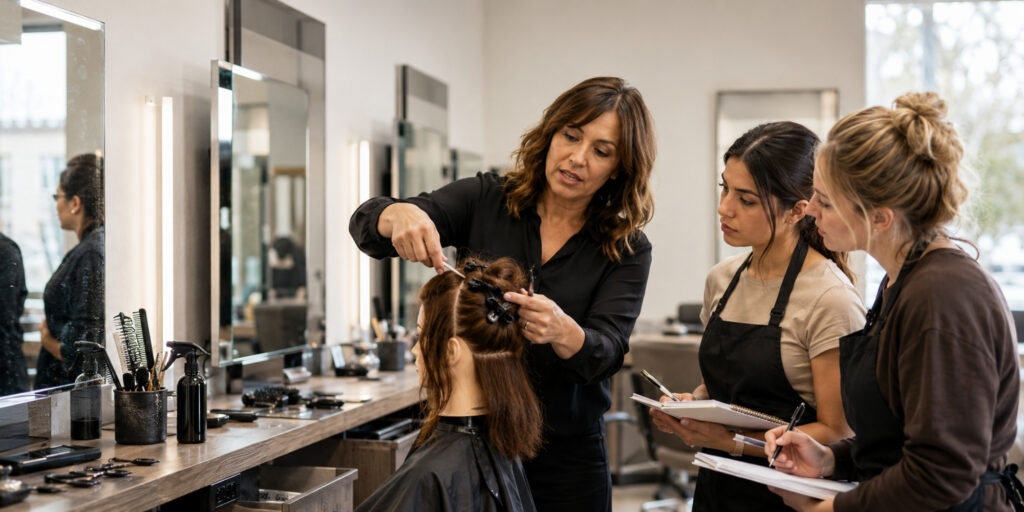
If you have been standing behind a salon chair for years, you know exactly how demanding this career can be on your body. Long hours on your feet, the constant wrist movement, and the physical strain of daily styling eventually catch up with every beauty professional. Many talented artists love the industry but find themselves looking for a path that offers more physical longevity and a more predictable schedule without giving up their creative passion.
Moving from hands-on salon floor work into teaching is a natural next step for your career. Stepping into a classroom allows you to shift from daily manual services to a position of professional leadership and mentorship. You can protect your physical health, stabilize your income, and share your valuable experience with the next generation of students entering the beauty industry.
For those ready to transition their salon experience into a sustainable and structured educational career, navigating the licensing and training pathways is the first step toward becoming a qualified instructor.
Key Takeaways
- Physical & Career Longevity: Shifting from full-time floor work to education can extend your career lifespan by moving your daily focus from repetitive physical tasks to classroom leadership, grading, and lecturing.
- Predictable Financial Growth: Teaching at a beauty school can offer a more consistent income foundation, reducing the seasonal income fluctuations common with booth rentals and commission salon bookings.
- State-Driven Rules: Teacher licensing laws vary widely by region. Some states require specific clock hours and exams, while others have removed separate instructor credentials entirely. Always verify regulations with your local board before enrolling.
- The Hybrid Advantage: Some modern training options may allow you to complete theory courses through a remote or hybrid structure, though physical supervised student teaching and documented experience still depend on local school and state board rules.
Decoding the Roles - Beauty Instructors
Before filling out any state regulatory paperwork, it is important to understand the structural differences between teaching at an accredited institution and operating as a private coach. These titles are often used interchangeably online, but their legal authority, daily work environments, and regulatory duties are distinct.
Defining the Culture
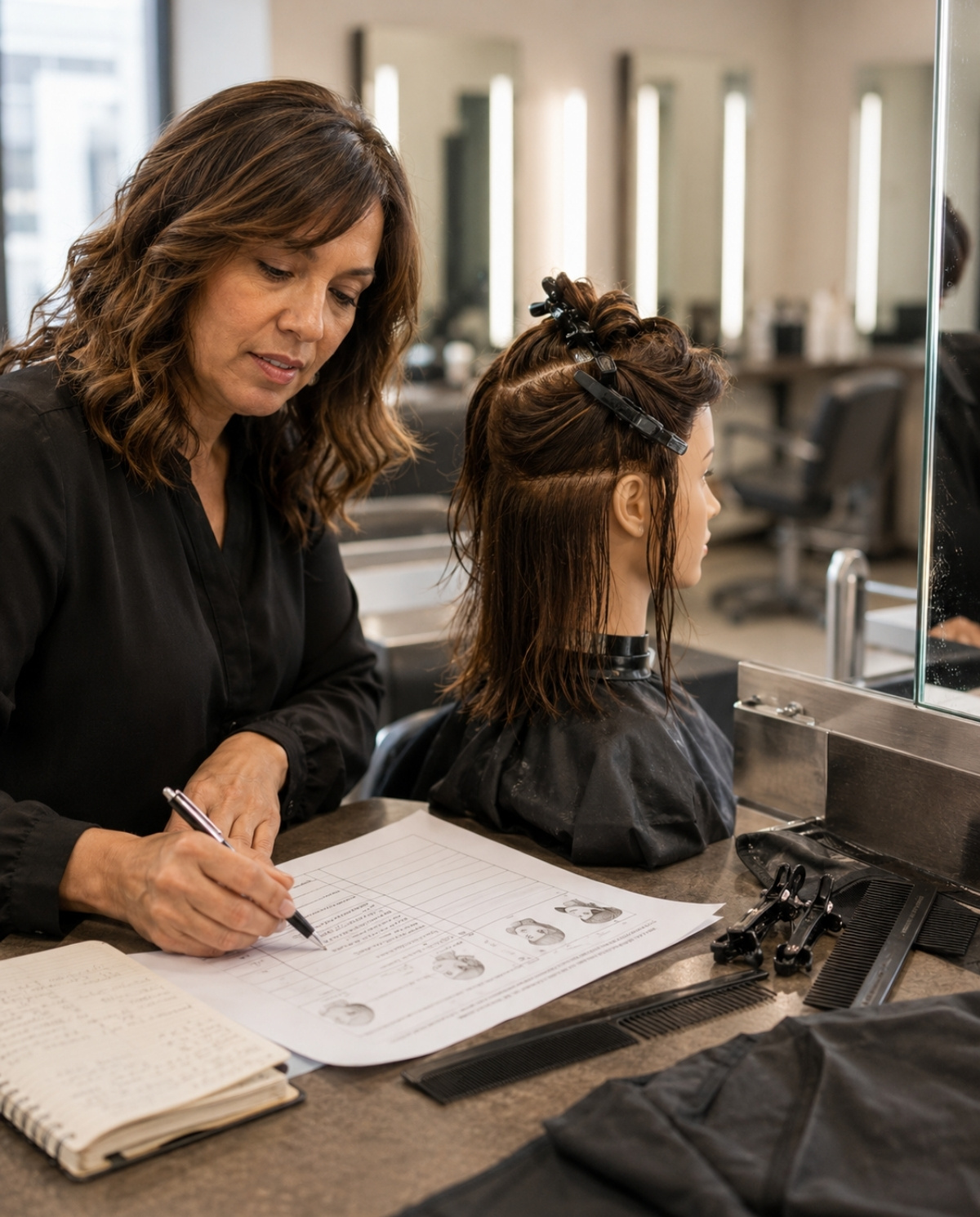
Entering the educational field means becoming a true beauty culture instructor. To define a beauty culture instructor clearly, you must look past simple technical talent and focus on the fundamental habits the role protects: chemical safety, sanitation protocols, client safety, professional ethics, and the regulatory frameworks that keep businesses compliant. You are not just teaching a student a modern styling trend; you are building their professional discipline from the ground up.
Since the specific duties and day-to-day career paths are explored in our comprehensive guide discussing the beauty instructor meaning, this article focuses directly on the step-by-step process of transitioning from a practitioner to a classroom teacher.
The Institutional Track
Within a licensed academy, a beauty school instructor serves as an essential institutional anchor. What is a cosmetology instructor required to do on a daily basis? Your responsibilities reach far beyond basic technical demonstrations. You are responsible for designing structured lesson plans, executing the school curriculum, grading academic exams, guiding students through practical skill milestones, and managing the busy workflow of the student salon floor.
Operating in this position legally requires adherence to the specific rules of the state where you teach. In many regions, this involves graduating from an approved beauty school instructor training framework and passing a formal instructor exam. In other parts of the country, the process relies on your active practitioner license, verified salon hours, employer hiring preferences, or individual school credentials. Regardless of the region, it is a highly regulated teaching environment focused on guiding students through mandatory training hours while upholding state board standards.
The Independent Track
On the other side of the educational spectrum is the independent beauty educator. A private educator of beauty generally works outside the traditional academy system. These professionals build their own specialized training courses, lead private advanced masterclasses, or grant private beauty educator diplomas to licensed professionals searching for specialized skills.
While an online beauty educator focuses deeply on virtual brand growth, digital mentorship, and remote business consulting, their work remains connected to the educational standards of the industry. Many independent coaches choose to take formal beauty educator training courses to study adult learning styles, communication methods, and curriculum building, even if their specific business model does not require a state-issued teacher license.
Niche Specializations
Depending on the foundational practitioner license you hold, your teacher training path will focus on a specific branch of the profession:
- The Hair Specialist: If your goal is to teach cutting, coloring, and chemical texturizing, you will focus on becoming a hair stylist instructor or a comprehensive hair and beauty instructor. For professionals specializing in natural textures, locs, and protective braiding, a natural hair care instructor pathway is highly beneficial in states that regulate natural hair care as an individual license category or a distinct teaching domain.
- The Skin Specialist: If your passion lies in clinical skincare, you will move into the role of an esthetics instructor. A common question often arises: can a cosmetology instructor teach esthetics? The answer is determined by the scope of practice rules set by your local board. In certain states, a cosmetology instructor can teach basic skin concepts if those modules were included in their original cosmetology training. However, advanced esthetics, chemical exfoliation, or clinical-grade skin services may require a dedicated esthetics instructor credential or a skin-specific teaching qualification.
- The Nail Specialist: If your talents center on nail enhancements, extensions, and structural nail artistry, you will perform the responsibilities of a nail tech instructor. Shifting into this role as a licensed nail instructor may require completing a specialized nail instructor program, depending on your state, where your education balances modern artistic design with chemical safety, disinfection protocols, and nail anatomy.
The Financial & Career Longevity Reality
- The Data: Current earnings statistics from ZipRecruiter show that the national average salary for a beauty educator is $55,852 per year. Most salaries range between roughly $36,000 and $63,000, with top earners reaching around $75,000. Higher earnings outside this typical range generally point to specialized corporate brand education, school management, independent digital course sales, or alternative educational positions. For comparison, the U.S. Bureau of Labor Statistics Occupational Outlook reports that hairdressers, hairstylists, and cosmetologists earned a median wage of $16.95 per hour in May 2024, which translates to approximately $35,250 annually for full-time employment.
- The Takeaway: Transitioning into an educational career path can provide a more predictable income baseline than relying solely on salon client volume, shifting commission percentages, or booth rental costs. More importantly, it shifts your professional experience from physical manual labor to conceptual mentorship, helping you build a longer and more sustainable career.
State Licensing and Hour Requirements
The largest hurdle for future teachers is navigating state administrative processes. Years of experience behind a salon chair do not automatically authorize you to manage a classroom. In many states, you must earn a formal beauty school instructor license or satisfy documented instructor qualification standards before you can legally teach inside a licensed school.

Breaking Down the Hours
To qualify for a teaching credential, many state boards require documented training hours, approved coursework, verified salon experience, or a blend of these requirements. There are two primary pathways available to fulfill these metrics:
- The Academy Path: You enroll directly into an instructor training program at an approved beauty school. In this setting, you follow a structured curriculum centered on educational psychology, lesson plan creation, test design, classroom management, and practical supervised student teaching.
- The Apprenticeship or Experience Path: Certain states offer an instructor apprenticeship option, structured on-the-job instructor training, or alternative work-experience pathways. Rather than completing a traditional institutional program, you can qualify by documenting your professional salon experience under the guidelines of your state board.
A Snapshot of State-Specific Rules
Because regulatory laws are local, teacher training pathways vary drastically across different states:
- Texas & Florida: Texas represents a unique case because the state removed separate barber and cosmetology instructor licenses entirely. According to the Texas Department of Licensing and Regulation, licensed schools can hire educators without requiring a separate teacher license, though institutions must still comply with state operational rules and hiring qualifications. Florida also differs from many regions because the Florida DBPR cosmetology licensing structure does not outline a distinct cosmetology instructor license in the manner of states like Georgia or North Carolina. In both areas, professionals must verify school-level hiring standards before assuming a private certificate is sufficient.
- Ohio & Georgia: Earning an Ohio cosmetology instructor license requires following the professional track managed by the Ohio State Cosmetology and Barber Board, including the current requirements for instructor applicants in that jurisdiction. In Georgia, the rules are directly relevant for local beauty professionals: the Georgia Secretary of State requires instructor applicants to complete formal application steps, maintain an active Georgia master-level practitioner license, provide proof of work experience, and pass the mandated instructor licensing exams.
- Utah & North Carolina: North Carolina requires teacher candidates to finish an approved training course or meet a specific professional experience milestone. The North Carolina Board of Cosmetic Art Examiners mandates 800 hours for cosmetology teachers, 320 hours for manicurist teachers, 320 hours for natural hair care teachers, or 650 hours for esthetician teachers, with alternative pathways for those showing full-time salon experience. Utah maintains strict standards as well: the Utah Department of Commerce notes that instructor candidates must pass the official Utah Instructor’s Theory examination and qualify through the proper instructor path for their specific field.
Can You Complete Your Instructor Training Online?
Because most prospective educators work full-time to balance personal bills, finding a flexible educational schedule is a top priority. This need makes a remote or hybrid program highly
 attractive.
The Reality of Hybrid Learning
Can you get your instructor license online? The realistic answer depends heavily on your state board rules. A cosmetology instructor course online or an online esthetics instructor course may allow you to complete theoretical subjects from home, covering vital areas like cognitive learning styles, lesson planning design, grading ethics, and student management methodologies.
However, digital convenience does not mean automatic licensing approval. Before enrolling in any program, confirm that the school holds valid state board approval and that the completed distance hours will be accepted toward the instructor qualification path you require.
What Must Be Hands-On
You cannot master how to de-escalate a conflict on a busy student clinic floor or accurately evaluate a physical hair cutting angle through a webcam. Many state-approved teacher programs require a dedicated portion of supervised student teaching, physical clinic floor management experience, or documented practical work before graduation. During this phase, you may work inside a physical school to deliver live lectures, critique student work, and manage real salon setups under the guidance of an experienced educator.
The Myth of "Free" Programs
Be careful regarding online advertisements offering free online instructor training in the USA. Free study materials, introductory webinars, and video tutorials are helpful prep tools, but they usually cannot replace a state-approved instructor program, an official apprenticeship, or documented qualifying field experience.
True professional respect requires a valid educational foundation. Choosing a reputable beauty academy helps ensure your accumulated clock hours are legally recognized, your education matches state expectations, and your preparation connects directly to real career opportunities.
The Tech-Driven Classroom
- The Data: Recent beauty-school and industry trend coverage from The COLLECTIV Academy and Rizzieri Aveda School points to growing interest in digital tools, highly personalized services, augmented reality try-on applications, scalp health, skin barrier awareness, and more consultative beauty services. While these modern updates do not replace classic state board foundations, they emphasize why contemporary educators must feel comfortable teaching both traditional techniques and modern client expectations.
- The Takeaway: Selecting a training facility that embraces modern salon tools, consulting methods, and updated industry standards is vital. Training at a school that relies on outdated teaching concepts can leave you unprepared to guide a modern classroom or teach the client-centered consulting practices that modern salon employers demand.
Conquering the State Board Instructor Exam
It is perfectly natural to feel nervous when preparing to take official exams again. You might be a master of medical skin treatments or an expert hair colorist, but taking a test on the psychology of teaching requires an entirely unique style of study.
The Structure of the Test
The layout of the state board instructor exam varies by region, so always confirm the exact format with your licensing agency or your training school. In many states, instructor evaluation may include one or both of the following areas:
- The Written Theory Exam: This portion may test your understanding of educational psychology, classroom safety, liability management, disinfection instruction, lesson plan formulation, and student grading metrics. You may be evaluated on how to support different learning speeds and how to build objective, fair testing rubrics.
- The Practical or Teaching Evaluation: In regions that include a practical teaching demonstration, you may be required to deliver a live or simulated lesson plan to examiners. Proctors may score your vocal projection, clarity of visual aids, safety compliance demonstrations, lesson structure, and your overall ability to explain complex manual movements in a clear, digestible manner.
Preparation Strategy
To pass your test on the first try, give your study preparation the same level of discipline you dedicated to your original practitioner license. Utilize a targeted cosmetology instructor study guide, study your state board's official candidate information handbook, and take timed practice tests whenever they are available. Focus on state-specific study resources—such as a Utah cosmetology instructor practice test or Ohio cosmetology instructor license study materials—because individual states structure rules, safety codes, and pedagogical expectations differently.
Conclusion: Your Next Steps
Transitioning from working behind a styling chair to becoming a qualified beauty instructor is one of the most effective ways to secure your professional future. It gives you the path to step away from the physical strain of full-time service work while raising your professional authority and creating a stable, long-term career path.
Your success in this educational phase depends entirely on the strength of your training. Entering a comprehensive, state-approved instructor program at a trusted beauty academy helps ensure that you do not just study to pass a written exam, but truly learn how to lead a classroom with genuine confidence.
Ready to Step into Your Legacy?
We have covered the required hours, licensing paths, and state board steps, but the ultimate decision comes down to where you want to build your educational career. Choosing the proper institution to anchor your educator training transforms your career path from day one. You need an educational platform that understands state board preparation while remaining aligned with where modern beauty education is going.
At Beauty NWA, we don't just prepare you to pass a state board exam; we prepare you to lead. Our training is designed specifically for experienced beauty professionals who want to transform their salon wisdom into a professional teaching foundation. Through structured guidance in lesson planning, adult teaching methodologies, classroom management, and curriculum delivery, you can build the skills and confidence to step into stronger leadership roles.
This path is an invitation to elevate your professional credibility and embrace a true educator mindset. If you are ready to move away from physical salon burnout and start building your legacy in the industry, you can find out more details in our Enrollment section.
Do not spend another exhausting day wishing for a sustainable schedule and reliable financial security. Take the definitive step toward your future goals today. Please drop your details in our contact form right below this article to connect directly with our team. Let's sit down, review your goals, and outline a flexible training path that respects your current professional schedule while preparing you to command the classroom. Your next chapter begins today.
Frequently Asked Questions
What is the fee to renew a cosmetology instructor license?
Renewal fees vary widely by state, specific license type, and the renewal timeline, meaning there is no uniform national fee. Certain states also mandate continuing education hours prior to renewal. For example, Georgia’s board explains its continuing education expectations through the Georgia State Board of Cosmetology and Barbers continuing education requirements. Always check your specific state board's current fee schedule before your legal renewal deadline arrives.
What is the difference between a beauty educator diploma and a state license?
A beauty educator diploma or certificate is typically awarded by a private brand, product manufacturer, advanced specialty academy, or independent training provider. It serves as proof that you have mastered a specific trademarked method or product system. A state-issued instructor license, where required by law, is a legal credential granted by a state government board that authorizes you to teach approved licensing curriculum inside a registered beauty school.
Can I use my cosmetology instructor license across different states, or do I need to retest?
This process depends completely on the licensure reciprocity or endorsement agreements between individual state boards. If you move from a state with lower mandatory hour metrics or different testing formats into a state maintaining stricter regulations, you may be required to complete additional training hours, provide verified proof of salon experience, pass a localized state law exam, or apply for a completely new credential before your license is officially recognized.
What should I include on a beauty instructor resume if I have never taught before?
If you lack formal classroom teaching experience, highlight your history of informal leadership. Detail your experience training salon assistants, mentoring junior stylists, managing inventory, maintaining sanitation protocols, leading product knowledge meetings, or helping team members refine their technical skills. These points show your communication skills, organizational talents, professionalism, and readiness for an educational role.