


How To Become An Esthetician: A Guide To School, License, Cost, And Career Path

Starting a career in the beauty industry is an exciting move, but it often comes with a lot of questions about where to begin. I remember feeling overwhelmed by the technical side of things when I first transitioned from being a skincare fan to looking at it as a profession. It is about much more than just applying products; it is about understanding how skin functions on a biological level.
If you have been researching how to become an esthetician, you likely already know that the path involves a specific mix of education, hands-on training, and state certification. I want to help you break down the education for an esthetician, the actual costs involved, and what your day-to-day life might look like once you have your license in hand.
Key Takeaways
- Fast-Track Training: Most students complete their requirements in 4 to 12 months, which is much quicker than a standard degree.
- Strong Job Outlook: According to the Bureau of Labor Statistics, the field is expected to grow by 7% through 2034.
- Earning Potential: While the average pay is roughly $45,374, those who become Master Estheticians can see salaries upwards of $66,900.
- Regulatory Updates: The Modernization of Cosmetics Regulation Act (MoCRA) has introduced stricter standards for professional accountability starting in 2026.
Understanding the Modern Scope of Practice
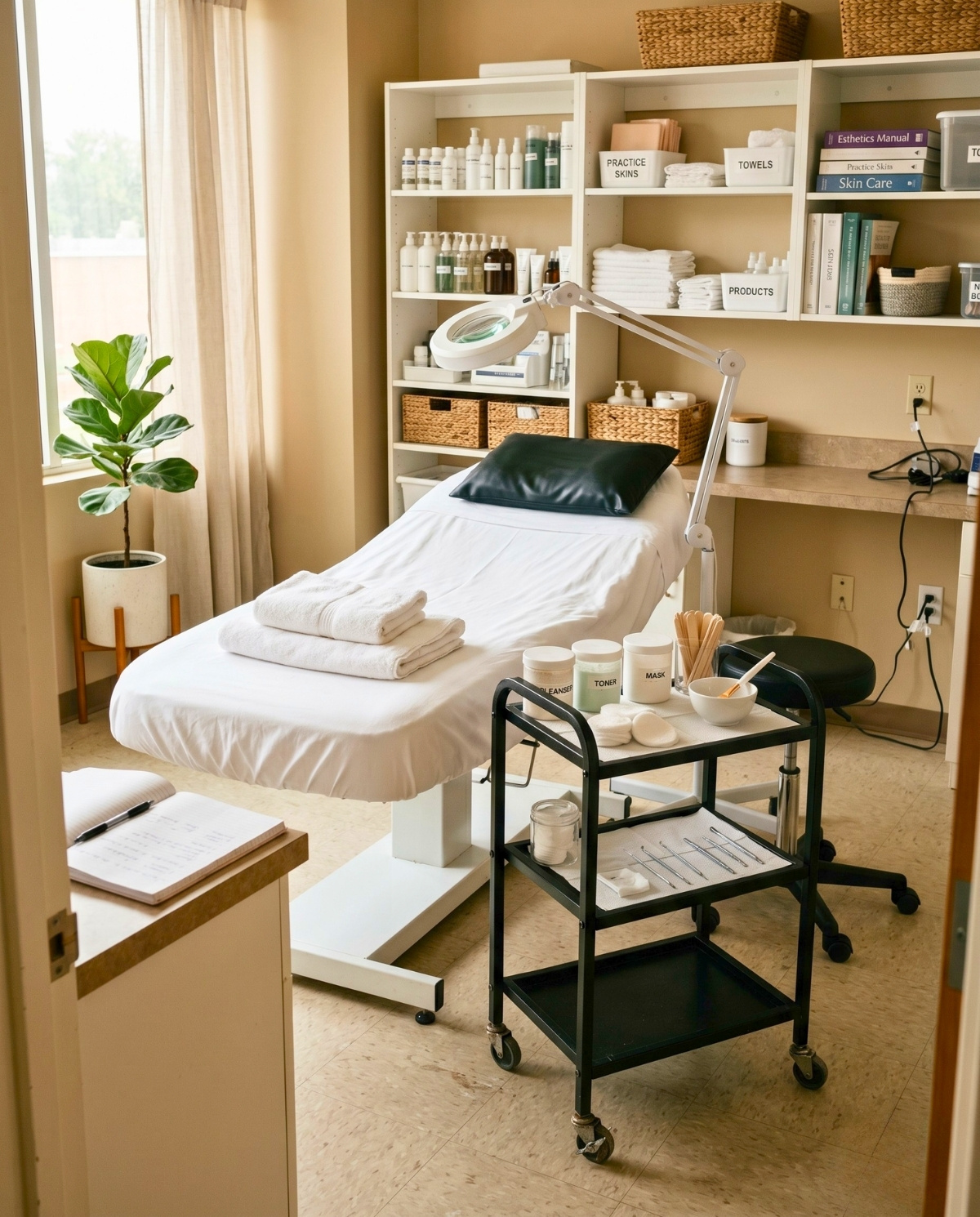
The beauty world has changed significantly recently. Industry experts at Mintel are now focusing on "Metabolic Beauty," which looks at how internal health affects the skin's surface. As a professional, your primary focus will be the lipid barrier, which acts as the body’s first line of defense against bacteria and moisture loss.
In a professional setting, you will use advanced tools and clinical-grade exfoliation to help with cellular repair. This shift toward "Bio-intelligent actives" means that modern clients expect you to be a skin expert, not just someone providing a relaxing service. Choosing a school that keeps up with these biotechnology trends will give you a major advantage in the job market.
The Academic Requirements for an Esthetician
Before you dive into the fun parts of training, you need to handle the basic qualifications for an esthetician. In most states, you must be 16 or 17 years old and have a high school diploma. I often get asked if you can be an esthetician with a GED, and the good news is that most state boards fully accept it as a valid educational prerequisite.
The typical steps for how to become an esthetician after high school are relatively simple. First, you look for schools with esthetician programs that fit your schedule. Then, you complete your training for an esthetician, pass your board exams, and finally apply for your official license.
Can You Go to Esthetician School Online?
It is very common to see ads for an online esthetician course, but I always advise people to look at the fine print. While you can certainly take some online classes for an esthetician to cover theory—like chemistry or sanitation—you cannot learn how to safely perform a chemical peel or a professional facial through a screen.
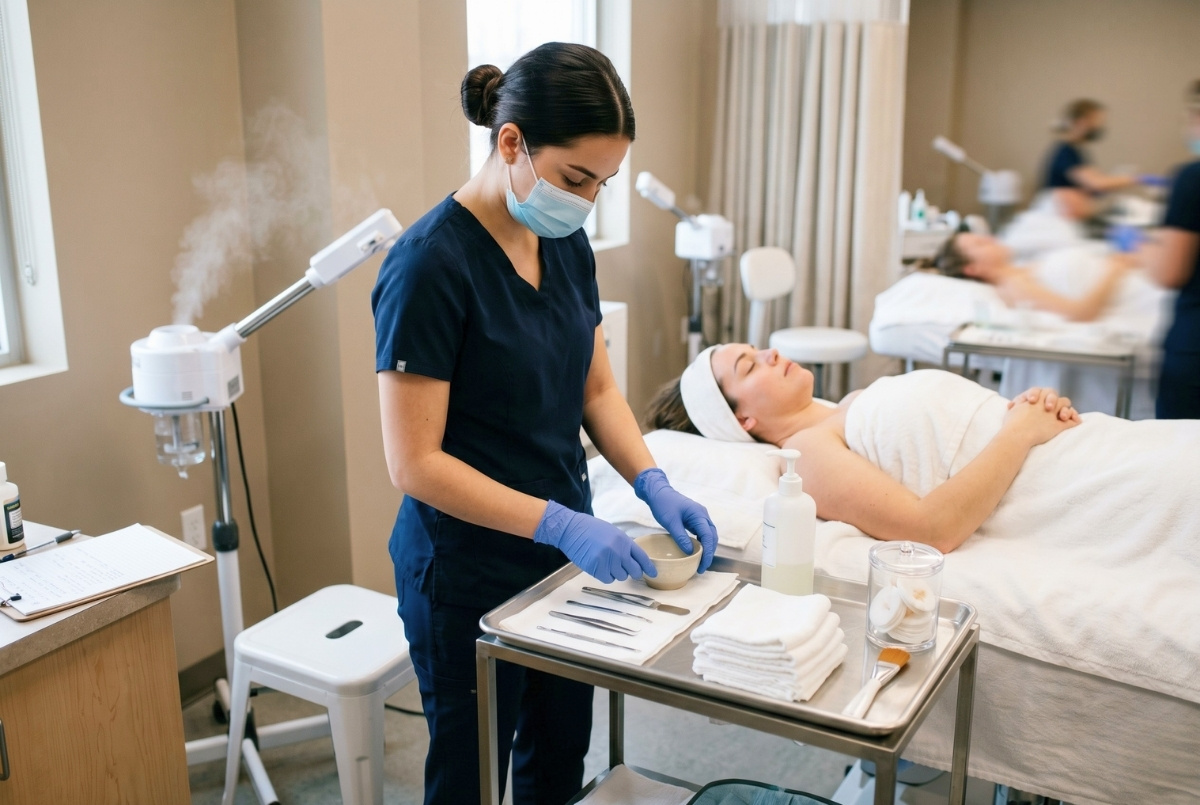
Most states require several hundred hours of hands-on practice in a student clinic. If a program claims you can become an esthetician without going to school in person at all, it likely won't lead to a license. Missing out on that physical training for an esthetician would make it impossible to meet the practical requirements required by the state.
How Long Does It Take to Become an Esthetician?
If you are wondering how many years of school for an esthetician are necessary, you will be happy to know it is usually a matter of months. While the Bureau of Labor Statistics notes that you must finish an approved program, the actual esthetician hour requirements by state are what determine your timeline.
Most states require between 600 and 1,000 hours of training. Here is how that usually breaks down:
- Full-time schedules: Students can often finish in 4 to 6 months.
- Part-time schedules: These programs usually take between 9 and 12 months.
- State differences: Florida only requires 260 hours for a facial specialty, while states like Georgia or Alabama require a full 1,000 hours.
This faster pace allows you to get into the workforce much sooner than other career paths. You spend less time sitting in a lecture and more time working with clients in a clinic, which I find is the best way to build confidence.
The Price for Esthetician School and Financial Aid
Investing in your future means understanding the esthetician school cost. You might find tuition as low as $3,000 at a community college with an esthetician program, while private academies can cost over $15,000.
There are several ways to handle the cost to become an esthetician without breaking the bank:
- FAFSA for esthetician school: If your school participates in eligible federal student aid programs, you may be eligible for federal student aid.
- Grants for esthetician school: Some institutions offer internal grants that do not need to be repaid.
- VA Benefits: In many cases, the VA pays for esthetician school for veterans or their families.
Don't forget to account for "kit fees" when you are calculating how much for esthetician school you need to save. These kits include the professional tools you will use during your training and often throughout your first year of work.
How to Get Your Esthetician License
Once you finish your esthetician program, you move into the licensing phase. This is the official state recognition of your skills. While every state is different, many require a written theory exam, and some also require a practical demonstration.
The theory exam covers things like skin biology and safety laws, while the practical exam involves showing a proctor that you can perform services safely on a model. Some states, like California, have simplified this process, but many still require both parts to ensure you are ready for the field.
You should also plan for the cost to get an esthetician license, which usually involves application and testing fees totaling between $100 and $250.
Where Can You Work After Esthetician School?
The question of what can you do with an esthetician license has more answers now than ever before. You aren't just limited to a local salon. You could work in a medical spa alongside dermatologists, find a spot at a luxury resort, or even start your own freelance business.
Data from ZipRecruiter in early 2026 shows the average salary for an esthetician is about $45,374. However, specializing in high-demand services can increase that number. For instance, a Master Esthetician who works with advanced laser technology can earn over $66,900. Your yearly salary for an esthetician will generally increase as you build a loyal following.
Start Your Journey at Career Academy of Hair Design
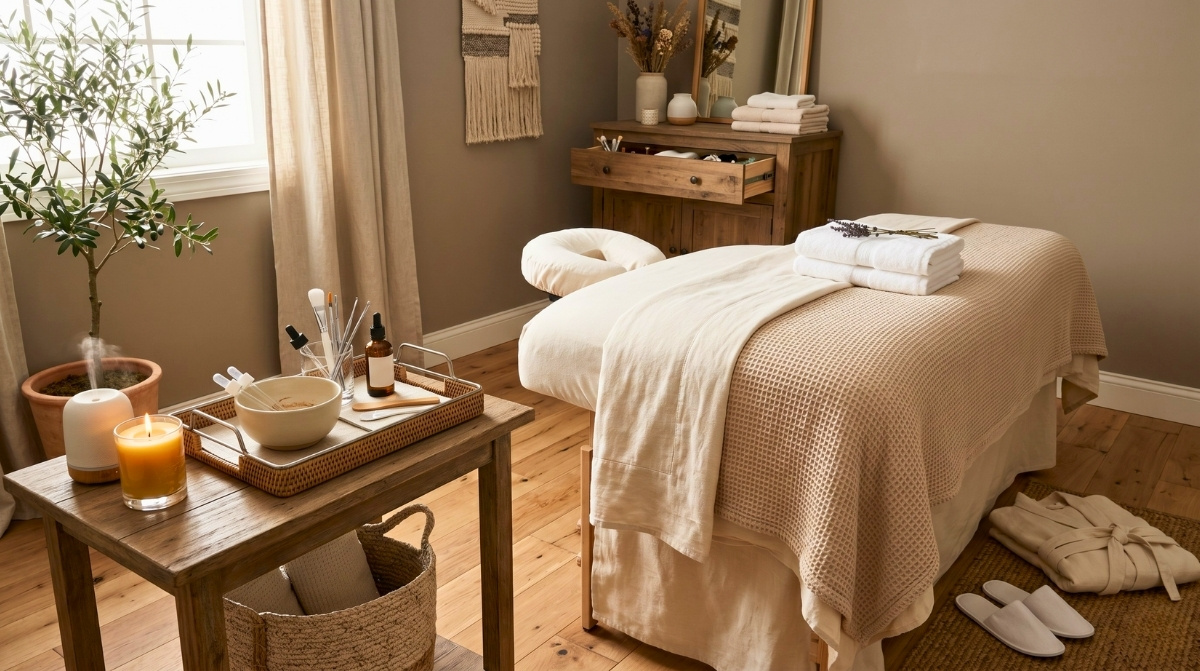
Choosing the right environment for your education is the first step toward a successful career. At Career Academy of Hair Design, we believe in a "Salon Ready" philosophy. This means we don't just teach you the basics to pass an exam; we prepare you with hands-on training for the reality of working in the beauty industry.
We focus on helping students build practical skills, strengthen their professionalism, and prepare for real career opportunities after graduation. If you are ready to turn your passion for skin health into a career, we invite you to see what we have to offer. You can find more details about how to join us on our Enrollment page.
If you have questions about the application process or our upcoming start dates, please fill out the contact form at the bottom of this article. We look forward to helping you take that first step toward becoming a licensed professional.
FAQ: Common Questions About the Career
Is it hard to get a job as an esthetician?
The demand for skin specialists is currently very high. Employers are specifically looking for graduates who have strong hands-on experience and a solid understanding of modern safety standards.
Do you need a degree to be an esthetician?
No, a college degree is not required. You only need a high school diploma or GED and the completion of a state-approved esthetician course.
Can you be an esthetician without going to school?
No. Every state requires you to complete a specific number of training hours at an approved school before you are allowed to take the licensing exam.