


Facial Aesthetics for Dentists: Training, Certification, and State Laws

A career in general dentistry can become demanding after years of repetitive restorative procedures, difficult reimbursement processes, and physically intensive chairside work. For some practitioners, facial aesthetics provides an opportunity to develop additional clinical skills and introduce selected self-pay services into an established dental practice.
Dental education already covers head and neck anatomy, facial musculature, nerve pathways, local anesthesia, occlusion, and perioral function. This knowledge can support further education involving the lips, smile, lower face, and muscles used for chewing. Nevertheless, neither a dental degree nor a privately issued certificate automatically gives someone legal authority to perform aesthetic procedures. Practitioners must possess the professional license required where treatment occurs and comply with that jurisdiction’s scope-of-practice rules.
This is particularly important for international graduates considering clinical cosmetology after BDS or a fellowship in medical cosmetology after BDS. A foreign BDS generally does not, by itself, permit someone to practice dentistry in the United States. Internationally trained dentists must satisfy the licensing requirements of their intended state, which may include completing an advanced-standing DDS or DMD program. Procedures involving dermal fillers and neurotoxins are normally classified in the US as facial aesthetics or aesthetic medicine, not conventional cosmetology.
What Dentists Should Know First
- Self-Pay Revenue: Cosmetic facial-aesthetic procedures are frequently paid for directly by patients, reducing dependence on insurance reimbursement and removing dental laboratory costs for those treatments. Actual profitability still depends on product expenses, scheduling, liability coverage, marketing, inventory waste, follow-up care, and complication management.
- Different Rules in Every State: A procedure permitted for dentists in one state may be restricted in another. Georgia, for example, requires most qualifying dentists to complete a Board-approved postgraduate course lasting at least 21 hours and limits injectable treatment according to its dental connection and setting.
- Existing Knowledge Is Only a Starting Point: Dentists possess relevant knowledge of facial anatomy and perioral function, but they still require procedure-specific education covering patient selection, injection methods, consent, contraindications, and emergency response.
- Certificates Do Not Change State Law: ADA CERP recognition, AGD PACE approval, and private certificates may provide information about a continuing-education organization, but they do not grant treatment authority, guarantee state-board acceptance, or confirm malpractice coverage.
How Dental Scope Applies to Facial Procedures
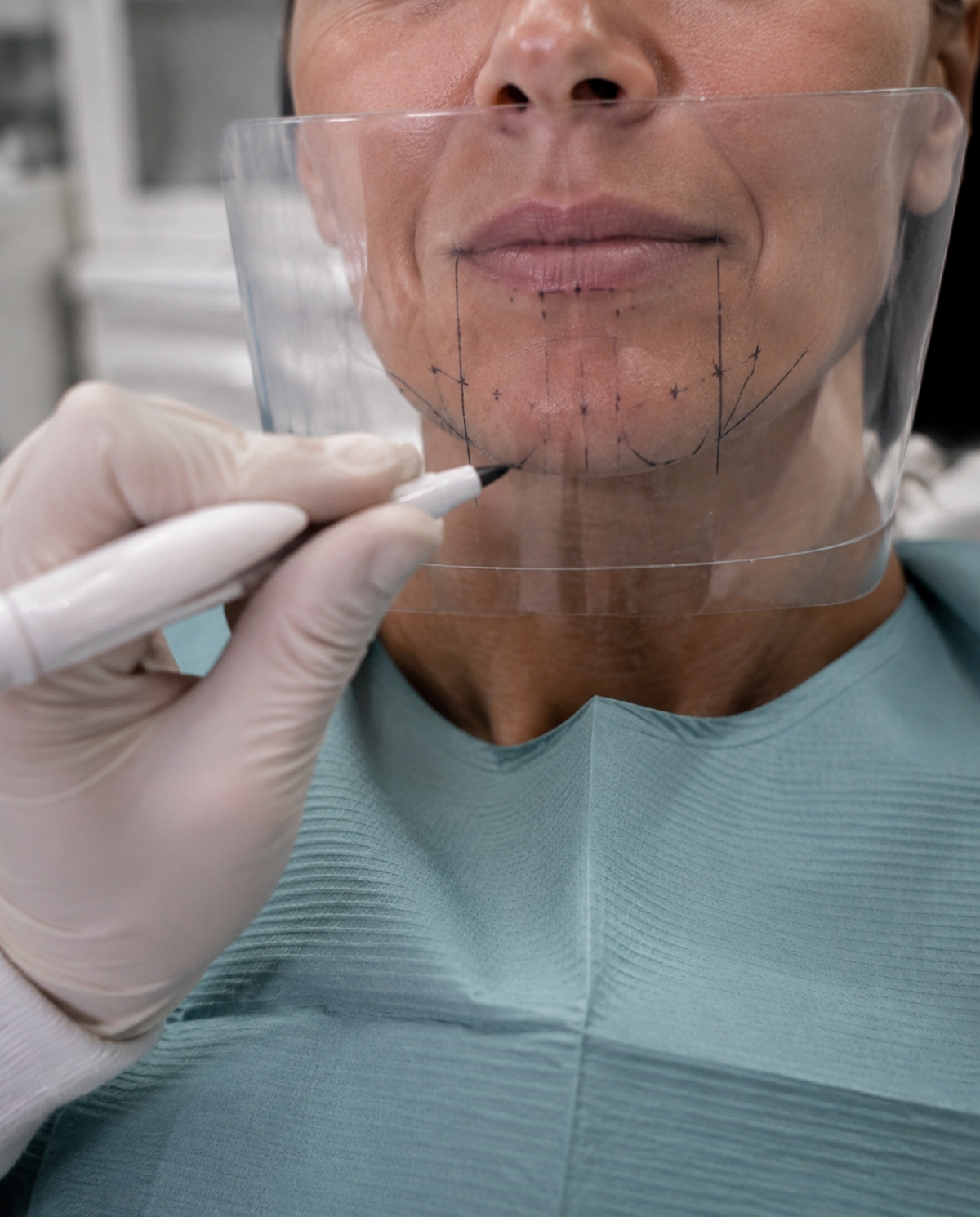
Using Existing Dental Knowledge Safely
Dental education develops detailed knowledge of the facial and trigeminal nerves, facial muscles, vascular structures, occlusion, and the relationship between the teeth, jaws, lips, and cheeks. Dentists also administer local anesthesia routinely and evaluate how oral structures affect function and facial balance. These capabilities can be valuable when assessing the lower face and the appearance of a patient’s smile.
They do not eliminate the need for additional clinical education. Neurotoxins and fillers involve distinct pharmacology, contraindications, anatomical danger zones, consent obligations, injection techniques, and emergency procedures. A dentist must become competent in the individual treatment while staying within the purposes, locations, and conditions permitted by state law.
The central regulatory question is whether a proposed procedure falls inside the state’s definition of dental practice. No nationwide rule gives every US dentist identical injectable privileges. A dental board may regulate treatment according to anatomical location, therapeutic or cosmetic purpose, connection to dental care, required education, practice setting, documentation, or delegation. Knowledge of an anatomical region does not create legal authority to treat it.
Some states authorize qualifying dentists to perform functional and cosmetic procedures within defined oral and maxillofacial regions. Others limit treatment to particular structures or require a direct relationship with a dental procedure or treatment plan. Anyone considering a diploma in facial cosmetology after BDS or another privately named credential should examine current statutes, administrative rules, official board policies, and written guidance before enrolling or treating patients.
Examples of the regulatory differences include:
- Georgia: Under Georgia Rule 150-14-.04, a licensed dentist may administer qualifying injectable pharmacologics for functional or cosmetic enhancement of the gums, cheeks, jaws, lips, oral cavity, and associated tissues when the treatment is connected with a dental procedure and performed in a dental treatment setting. Unless the dentist completed an ADA-accredited oral and maxillofacial surgery specialty program, the dentist must complete a Board-approved postgraduate course of at least 21 hours. The dentist must also submit a certified completion certificate to the Board within 30 days, comprehensively assess the patient’s dental needs, maintain the required treatment records, and personally administer the injectable instead of delegating it.
- Arkansas: Arkansas’s published dental rules do not appear to contain the same detailed framework for injectable procedures found in Georgia. Dentists should obtain current written guidance directly from the Arkansas State Board of Dental Examiners before purchasing injectable products, promoting these services, or treating patients.
These regulatory distinctions must be understood before a new service is introduced. Beauty professionals may consult information about cosmetology hours, examinations, renewals, and license transfers by state, but dentists must examine the separate rules established by their dental board. A foreign BDS, US dental license, cosmetology license, esthetics license, and private facial-aesthetics certificate are separate credentials with different legal consequences.
Functional Care and Cosmetic Results
A procedure may sometimes have both therapeutic and aesthetic effects. Some clinicians use botulinum toxin off-label in selected cases involving overactive masticatory muscles, masseter hypertrophy, bruxism, or certain temporomandibular disorders. Reducing activity in an enlarged or overactive masseter may provide a functional benefit for an appropriately selected patient while also producing a more tapered lower-face appearance over time.
These applications are not universally approved or automatically permitted for every dentist. The term TMJ refers to the temporomandibular joint itself, while the broader category of related conditions is known as temporomandibular disorders, or TMD. Botulinum-toxin use for bruxism and many TMD-related purposes is generally off-label in the United States because these purposes are not specifically included in the product’s FDA-approved labeling.
Off-label use may be lawful within professional practice, but the clinician still needs an appropriate clinical justification, adequate competence, informed consent, and authorization under state law. A cosmetic procedure that falls outside dental scope does not become lawful simply because it is labeled therapeutic or loosely associated with smile design. The diagnosis, purpose, anatomical site, patient records, consent documents, and advertising must accurately describe the treatment being delivered.
The discussion published by Oberman Law Firm provides general background on how states approach injectable procedures in dental offices. It is a private legal overview rather than the law itself. Current statutes, administrative regulations, official dental-board guidance, and advice from a qualified healthcare attorney should take priority whenever professional scope is uncertain.
Evaluating Postgraduate Training Options

Private facial-aesthetics education includes brief workshops, online modules, multi-stage certificate courses, and programs marketed as fellowships. Terminology differs between providers. Unlike a state license or a CODA-accredited dental specialty, labels such as certificate, diploma, and fellowship do not have one standardized meaning throughout the facial-aesthetics training industry.
A beginning-level workshop may run for one or several days and introduce facial anatomy, patient evaluation, neurotoxin or filler principles, and early complication recognition. A longer program may continue for several months and incorporate multiple treatment regions, supervised clinical participation, case assessment, skin procedures, and ongoing mentorship. Program length alone does not demonstrate educational quality or acceptance by a licensing board.
Before committing to a program, confirm:
- Whether the state dental board accepts the provider and proposed curriculum
- Whether the program includes every subject and training hour required by applicable law
- How instruction is divided among lectures, simulations, observation, and hands-on participation
- Whether live-patient education uses appropriately screened patients under qualified supervision
- Whether instructors possess the licenses and experience needed to teach the procedures
- Whether the curriculum addresses anatomy, dosing, contraindications, product handling, informed consent, and complication management
- Whether clinical guidance or mentorship remains available after introductory training
- Whether the dentist’s professional liability carrier will recognize the education
Microneedling, chemical peels, lasers, facials, and other skin services must be reviewed individually. Permission to provide certain injectable treatments under a dental license does not necessarily include lasers, general esthetics, or unrestricted skin treatment. Conversely, holding a cosmetology or esthetics license generally does not authorize someone to prescribe or inject neurotoxins or dermal fillers.
Beauty professionals may work across certain services after understanding what their cosmetology license permits. Dental practitioners should not assume that their dental education automatically gives them the legal privileges of an esthetician or cosmetologist. Beauty-school education also does not enlarge the medical or dental authority provided by a professional license.
The Value of Direct Clinical Supervision
Online instruction can support the study of facial anatomy, pharmacology, skin biology, informed consent, and complication theory. It cannot fully replicate the tactile decisions involved in assessing tissue, choosing injection depth, observing how a product behaves, or reacting to an unexpected clinical event.
Each treatment category also requires its own competencies. Dermal-filler education must address vascular anatomy, tissue planes, product characteristics, injection risks, and vascular-occlusion response. Neurotoxin education requires knowledge of muscular function, dosing, diffusion, contraindications, and asymmetry. Microneedling and chemical-peel education must separately cover skin type, treatment depth, pigmentation risks, infection control, wound healing, and aftercare.
Dentists can look for education delivered by providers recognized through the American Dental Association’s Continuing Education Recognition Program or approved through the Academy of General Dentistry’s Program Approval for Continuing Education. These designations have specific limitations. ADA CERP recognizes continuing-education providers, not individual procedures or courses, and recognition does not guarantee that a state board will accept the training. In the same way, AGD PACE approves continuing-education organizations rather than separately endorsing every procedure they teach.
Dentists should verify both regulatory and insurance requirements before registration. The dental board can clarify whether the proposed course satisfies state rules, while the professional liability carrier can explain the documentation, education, or coverage changes required for the planned procedures.
Supervised education should devote particular attention to filler-related vascular occlusion. The US Food and Drug Administration warns that accidental injection of filler into a blood vessel can obstruct blood flow and cause tissue necrosis, vision abnormalities including blindness, or stroke. These complications are uncommon, but they can be serious and permanent.
Training should address early warning signs, product-specific response procedures, informed consent, appropriate emergency supplies, accurate documentation, referral arrangements, and immediate escalation when visual symptoms or signs of tissue ischemia appear. Not every type of filler has the same response or reversal options. Completion of a course does not guarantee malpractice coverage, although documented and relevant clinical education may be one factor considered by a licensing board or insurer.
Assessing Revenue and Operating Costs
Insurance administration, delayed reimbursements, and laboratory bills can create substantial pressure within general dentistry. Cosmetic facial-aesthetic procedures are commonly self-pay, allowing a practice to avoid insurance billing and dental laboratory charges for those particular services.
Self-pay treatment is not automatically high-profit treatment. Product purchasing, storage, expiration, discarded inventory, clinical supplies, employee education, appointment time, marketing, liability premiums, follow-up appointments, refunds, and complication care can significantly affect the financial outcome.
A practical calculation should include:
- Revenue actually collected minus the cost of treatment products
- Minus expired, unused, or discarded inventory
- Minus supplies and clinical staff time
- Minus marketing and professional liability expenses
- Minus follow-up treatment and complication-management costs
Financial planning should be based on local treatment prices, realistic product utilization, patient demand, and available appointment capacity. Promotional revenue figures from training providers should not be treated as reliable projections for an individual dental practice.
What Procedure Data Actually Shows
Many patients choose minimally invasive treatments because they generally require less recovery time than surgery. Outcomes, risks, and downtime still vary according to the procedure and the individual patient. Neuromodulator effects typically develop over several days. Some dermal fillers create a visible change immediately, although early swelling or bruising may temporarily alter the appearance. Skin-remodeling procedures may require more time before changes become noticeable.
The American Society of Plastic Surgeons reported approximately 25.4 million minimally invasive cosmetic procedures in 2023. This total included approximately 9.48 million neuromodulator procedures and 5.29 million treatments using hyaluronic-acid fillers. The figures demonstrate substantial national activity, but they do not establish how much demand or revenue an individual dental office will generate.
Patients may consider their smile in relation to their overall facial appearance. Someone receiving veneers or clear aligners may also raise questions about lip volume, perioral lines, skin texture, or lower-face balance. If state law permits the proposed service and the dentist has appropriate clinical training, selected patients may be able to discuss these concerns within an existing professional relationship.
Chemical peels create controlled exfoliation, but their effects are not identical at every depth. Results depend on the chemical agent, concentration, formulation, contact time, treatment depth, and patient characteristics. Superficial peels may primarily affect surface texture and pigmentation. Deeper controlled treatments may create more substantial remodeling but also involve greater recovery requirements and additional risk.
According to a commercial estimate from Fortune Business Insights, nearly 61% of aesthetic procedures performed in the United States involve nonsurgical facial treatments. This percentage is an industry estimate, not a national clinical registry or independently verified procedure count.
The American Academy of Facial Esthetics states in its promotional materials that a typical dentist member adds approximately $30,000 per month in production after combining facial pain, facial aesthetics, and dental sleep-medicine services. This organization-reported figure combines several categories and has not been independently verified as an estimate of injectable revenue. In addition, production refers to gross treatment value rather than net profit or personal income. It should not be used as a guaranteed financial forecast.
Creating a Responsible Entry Strategy

Adding facial-aesthetic services requires a deliberate process that protects the clinician’s license, patients, and dental practice.
Begin by confirming professional licensure and legal scope. International BDS graduates should identify the complete pathway to dental licensure in the state where they plan to work. Dentists who are already licensed should ask their state board about permitted products, anatomical regions, treatment purposes, locations, required education, documentation, permits, and delegation. When published rules remain unclear, written board guidance is more dependable than a training company’s interpretation.
Next, select education that satisfies both clinical and regulatory needs. Review the qualifications of the instructors, curriculum content, amount of supervised participation, live-patient policies, and emergency instruction. The program should include patient assessment, contraindications, informed consent, vascular and facial anatomy, dosing, product handling, treatment planning, documentation, adverse-event recognition, vascular-occlusion management, and referral procedures.
Professional liability coverage should be confirmed before any service is promoted or performed. A standard dental malpractice policy may not automatically cover cosmetic injectables or other aesthetic treatments. Give the insurer a written description of the intended products, procedures, treatment regions, education, and practice setting. Obtain written confirmation explaining whether coverage is included, separately endorsed, restricted, separately underwritten, or excluded.
Clinical systems must then be prepared for each treatment. These systems may include procedure-specific consent documents, medical-history protocols, standardized photography, product lot and expiration tracking, follow-up schedules, emergency supplies, adverse-event procedures, and established referral relationships. Staff members should know how to identify urgent warning signs and immediately contact the appropriate clinician or emergency resource.
Once legal authority and insurance coverage have been confirmed, services can be introduced gradually within the existing dental practice. Appropriate discussions may occur during smile-design or facial-balance consultations. Treatment should proceed only after a complete assessment, informed consent, proper documentation, suitable scheduling, and confirmation that the procedure falls within the dentist’s authorized scope.
Common Questions About Entering Facial Aesthetics
Must I leave general dentistry to provide facial-aesthetic services?
No. Dentists may incorporate permitted facial-aesthetic treatments into an existing practice when state law, their education, the treatment purpose, the clinical setting, and liability coverage allow it. Some practitioners use dedicated appointment sessions to provide sufficient time for consultation, photography, consent, treatment, records, and follow-up.
How does an introductory workshop differ from a private fellowship?
A short course may introduce anatomy, patient evaluation, product principles, and basic procedures. A longer program may include supervised participation, advanced planning, case discussion, complication management, skin treatments, and mentorship. The label fellowship does not automatically identify a CODA-accredited specialty or a credential recognized by a licensing board. The actual curriculum and its regulatory acceptance are more important than its title.
Are cosmetic procedures covered by an ordinary dental malpractice policy?
Not necessarily. Coverage depends on the insurer and the individual policy. Dentists should submit details about the proposed treatments, products, anatomical regions, practice environment, and completed education and obtain written confirmation before treating patients. Attendance at a course offered by an ADA CERP-recognized or AGD PACE-approved provider does not guarantee insurance protection.
May dental hygienists or assistants administer these products?
Delegation rules differ by state, product, and profession. Georgia specifically prohibits dentists from delegating the administration of injectable pharmacologics under Rule 150-14-.04. Dentists elsewhere must verify whether hygienists or assistants may administer each product and what education, permits, supervision, or other conditions apply. Botulinum toxin is a prescription biologic drug, while dermal fillers are generally regulated as medical devices, so the two categories should be evaluated separately.
Does private education increase the legal scope of a dental license?
No. Training can develop competence and provide evidence of education, but it cannot enlarge the scope created by state law. The procedure must already fall within the authority of the dentist’s license, and the dentist must also satisfy any additional board requirements.
Can someone with a foreign BDS treat US patients after earning a private certificate?
Generally, no. A private facial-aesthetics certificate does not replace the dental or medical license required where treatment occurs. International graduates must first complete the relevant professional licensing pathway and then determine which additional aesthetic-procedure requirements apply.
Prepare for the Next Stage of Your Career
Entering facial aesthetics from general dentistry involves more than completing a short course. Practitioners need an active professional license, verified state authority, treatment-specific clinical education, emergency preparation, reliable documentation systems, and written confirmation of liability coverage.
For those interested in building a professional career in the wider beauty industry, Career Academy of Hair Design offers hands-on programs in cosmetology, aesthetics, manicuring, and instructor training. These beauty programs are separate from dental injectable education and do not provide dental-board authorization to administer neurotoxins or dermal fillers.
Explore a beauty education path that matches your goals. Visit our Enrollment page to request information, review the enrollment process, choose a program and campus of interest, or schedule a campus tour.