Mastering Nail Technology: A Professional Guide to Core Procedures and Essential Tools

I remember when I first started exploring the beauty industry; I honestly thought being a nail technician was all about artistic flair and steady hands. It didn’t take long for me to realize that the real pros are actually masters of science and structural engineering. In 2026, the shift toward medical-grade services means we have to be more careful than ever about chemical safety and structural integrity.

If you are currently trying to figure out where you fit in this evolving landscape, I suggest taking a look at this 2026 guide to your new career to see how the industry is changing. According to recent data from Business Research Insights, nearly a third of clients now report sensitivities to traditional salon chemicals, so establishing yourself as a health-conscious specialist is a very smart move.

Key Industry Shifts For 2026

  • Market Evolution: The nail sector is projected to hit $122.7 billion by 2035, largely driven by a demand for skin-first and medical-grade services.
  • Regulatory Compliance: Under the latest MoCRA updates, you must understand product chemistry to navigate new FDA safety standards and recall powers.
  • Structural Mastery: Success today centers on builder-in-a-bottle (BIAB) systems and precision e-filing rather than heavy, traditional acrylics.
  • Clinical Care: Bioactive ingredients like calcium silicate are clinically proven to increase nail thickness by 39%, moving our role from artist to health consultant.

The 2026 Starter Kit Checklist

I know that the startup cost and the time commitment for a new career can feel a bit overwhelming. To help you plan, I recommend reading about the licensing path and professional requirements so you have a clear financial roadmap. When you are ready to assemble your nail technology kit, I find it easiest to organize your purchases into four main pillars.

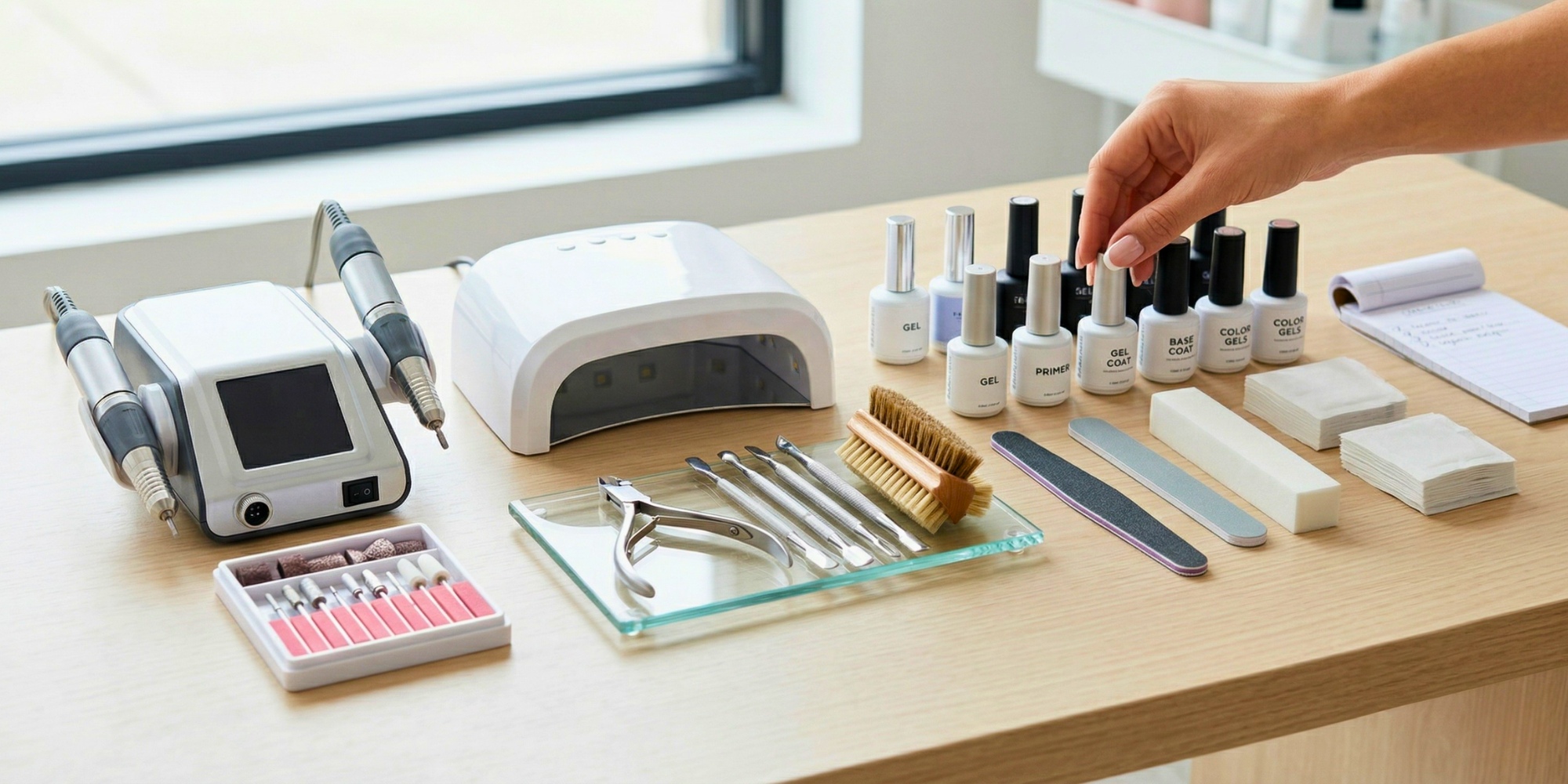
First, you have Equipment, which includes permanent assets like UV/LED lamps and high-torque electric files. Then you have Implements, which are multi-use steel tools like nippers and pushers. Next are Materials, which are the consumables like files, buffers, and wipes. Finally, there are the Professional Products, which cover the chemistry side – dehydrators, primers, and gels.

When people ask me what do beginner nail techs need, I always emphasize that their own health should be the priority. Your list of things for nail techs should definitely include a high-quality dust extraction system with a HEPA filter. In 2026, I consider this a critical requirement for a long and healthy career.

Defining The Tools Nail Technicians Use

A common mistake I see beginners make is spending too much money on trendy polish colors while neglecting the workhorse tools that actually generate revenue. It is important to distinguish between your daily operating costs and your long-term capital investments.

What Are Permanent Items Known As?

In a professional curriculum, you will often encounter the question: what are permanent items utilized in nail technology known as? These are officially categorized as Equipment and Multi-use Implements. Unlike disposables, these items represent your long-term infrastructure. High-quality stainless steel nippers and 48W+ UV/LED lamps are the backbone of your station. I always suggest investing in autoclave-ready steel to meet the clinical sanitation standards of 2026.

Specialized Hygiene And Modern Standards

Sanitation has moved way beyond a quick soak in blue liquid. High-performance nail technology tools, such as the Salmon Hygiene Technology nail brush, are now staples because their bristles are designed to resist bacterial load. Using these kinds of specialized tools nail technicians use is the fastest way to show a client they are in safe, professional hands.

The Impact Of MoCRA 2026

According to the FDA’s MoCRA updates, brand knowledge is now a legal safety requirement. In 2026, the FDA has mandatory recall authority, meaning your education regarding the products used in nail technology is a legal necessity for professional practice.

The Architecture Of Professional Extensions

To be a high-end technician today, you have to create extensions that look virtually indistinguishable from natural nails while remaining structurally sound. This requires mastering the C-curve and the Apex, which are the pillars of professional nail technology procedures.

The C-curve is the horizontal arch of the nail when viewed from the tip, providing the structural vault needed to prevent the nail from being too flat. The Apex is the highest point of the nail from a side view. It serves as the reinforcement zone; by placing the bulk of your product here, you ensure the nail can absorb daily impacts without cracking.

Mastering Nail Forms

Learning how to put a nail form on correctly is an essential skill for any student. Unlike plastic tips, a form allows you to sculpt a custom extension based on the specific geometry of the client’s finger. Knowing how to put nail form templates flush against the skin prevents the structural failure that leads to painful breaks. If you have ever wondered how do you put on a nail form for the best results, it all comes down to that perfect fit against the hyponychium.

Once the form is set, the material you choose is critical. Many professionals now favor specialized products like diva nail technology builder gel. These structured manicures are driving higher service prices because they protect the nail’s natural lipid barrier while providing incredible durability.

Precision Technology And Bioactive Science

The electric file is often the most misunderstood part of any nail care nail equipment list. When I teach someone how to use an e-nail, I explain that we aren’t drilling into the nail; we are actually performing a very fine micro-exfoliation. Using diamond bits at low speeds allows you to clean the lateral folds with surgical precision, which makes your gel application last much longer.

Strengthening The Natural Nail Bed

We are currently in a skin-first era of nail care. I am a big fan of systems like OPI Nail Envy with Tri-Flex technology because they mimic the natural keratin structure of the nail. By understanding how the Triflex technology creates a flexible shield and how a nail care pen with nail matrix technology supports the growth center under the cuticle, you can offer truly restorative services.

Whether you are using OPI Nail Envy original strengthener with Triflex technology or OPI Nail Envy Tri-Flex technology, you are helping clients rebuild their nail health from the root up. These treatments, including the OPI nail strengthening treatment with Tri-Flex technology, are vital for helping clients recover from damage caused by improper techniques.

The Evolution Of Press-On Nails

If you think press-ons are just for home use, you would be surprised. In 2026, professional press-on nail technology has turned these into high-end, custom-painted sets. Understanding what are nail press-ons in a professional context allows you to generate income even when you aren’t physically at your desk.

A 2025 clinical evaluation published by MDPI proved that bioactive formulations can increase nail thickness by 39% in just 28 days. When you can explain the reason behind the nail technology products you use, you transition from a service provider to a nail health consultant.

Aftercare Advice And Career Growth

My work doesn’t stop when the top coat is dry. The most successful technicians provide detailed aftercare advice for nail technology that focuses on managing mechanical stress. If I can teach my clients not to use their nails as tools, my work stays pristine, leading to the five-star reviews that grow my career.

The market is moving fast, and there is a massive opportunity for specialists who understand these advanced nail tools and uses. By choosing a path that emphasizes quality and safety, you are positioning yourself for success from day one.

Start Your Professional Journey

The move toward health-focused and medical-grade services is a huge opportunity for anyone starting out right now. At NWA Beauty Academy, I see every day how a salon-ready approach helps students prepare for the real world. We make sure you get hands-on experience with the same professional tools and products used in nail technology that top-tier salons expect you to know.

If you are ready to see what your future could look like, I invite you to find out more in Enrollment. You can also reach out through the contact form we’ve left at the end of this article to ask questions or schedule a time to visit us. I look forward to helping you build something beautiful.

FAQ: Mastering Your Nail Technology Tools

What do nail techs use for professional work versus home care?
Professional gear is much more powerful and precise. In school, you learn to use high-torque e-files and LED lamps with specific wavelengths that ensure the gel is fully cured, which is essential for preventing the allergies often caused by weak, consumer-grade equipment.

How do I choose the best tools used in nail technology for my kit?
I always suggest sticking to a consistent system. Using the base, color, and top coat from the same brand ensures the chemical bonds are compatible, which stops the nails from peeling or lifting too early.

What tools do you need to be a nail technician in a medical-grade salon?
You will need specialized nail technology tools including an autoclave for sterilization, professional-grade e-file bits, and a kit that focuses on hypoallergenic products to keep your clients safe from irritation.


Do You Need a Certificate to Be a Nail Technician? Understanding the Path to Professional Licensure

I have spent a lot of time watching the beauty industry evolve, especially as we move through 2026. It is a common sight lately to see talented artists creating incredible designs in their spare time and wondering if they could turn that passion into a full-time career. Transitioning from a hobbyist to a professional in the nail world is an exciting move, but it involves more than just having a steady hand for intricate art. Understanding the legal side of things is the first step toward building a business that can actually last. If you are just starting to look into this path, I recommend checking out this 2026 guide to your new career to get a feel for the current landscape before we get into the specifics of requirements and costs.

Key Takeaways for 2026

  • The Credential Gap: Finishing a course gives you a certificate, but only a nail technology license gives you the legal right to charge for your services.
  • Client Expectations: About 22% of clients now actively look for professionals with verified medical-grade sanitation training.
  • Modern Regulations: The full implementation of MoCRA this year means every tech needs a deeper understanding of product chemistry and safety.
  • Arkansas Standards: For those of us here in Northwest Arkansas, the state requires a specific set of training hours to qualify for the board exam.

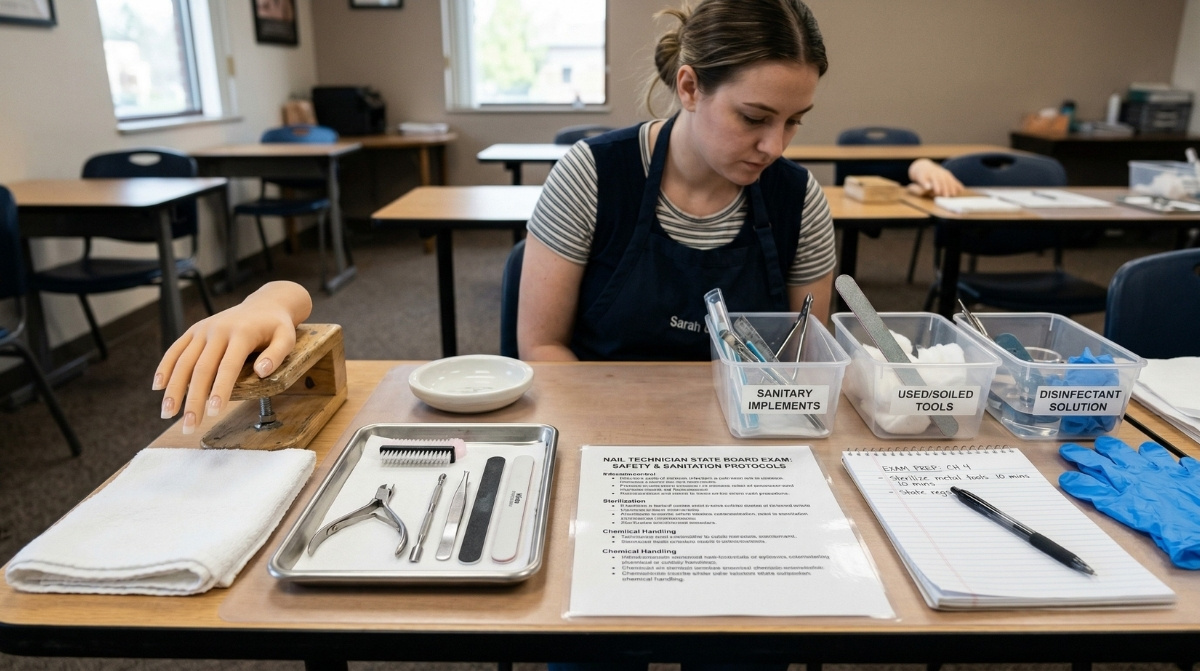
A focused nail trainee practicing filing on a mannequin hand at a wooden desk equipped with a lamp, open study workbook, and professional manicure tools in a bright, neutral-toned beauty school classroom.The Legal Foundation: Why a Certificate Isn’t Enough

I often see new students get confused about the terminology when they start their research. One of the biggest hurdles is realizing that a diploma from a workshop is not a permit to work in a salon.

Education vs. Licensing

If you are asking yourself do I need a certificate to be a nail technician, the answer is that you need a specific type of education that leads to a license. While a nail technician certificate proves you learned the skills, a state-issued license is what keeps you legally compliant with health codes. In 2026, having that license is more valuable than ever because of the Interstate Cosmetology Compact. This initiative is great because it helps licensed pros move between participating states without the headache of starting their education all over again.

The 2026 Safety Shift

The federal government has become much more involved in our industry recently through the Modernization of Cosmetics Regulation Act (MoCRA). I have noticed that the U.S. Food & Drug Administration is now holding professionals to a higher standard regarding the chemicals and polymers we use every day. To stay safe and legally protected, you need to be more than just an artist; you have to be a safety-conscious professional who understands the science behind the products.

The Educational Journey: Training and Testing

Choosing a nail technology program is probably your first major career decision. I always suggest that people compare a specialized nail tech program against a cosmetology license to make sure they are picking the path that actually matches their goals.

Here are the SEO-optimized text elements for your image, designed to enhance searchability for educational and professional beauty industry contexts.

Clock Hours and Training Models

So, how long is a nail program? Here in Arkansas, you are looking at a requirement of 600 hours of training. If you are a full-time student, I usually see people finish in a few months, while part-time students might take a bit longer. When people ask me how long it takes to train as a nail technician, I remind them that it is not just about the hours; it is about building the muscle memory for the job.

I also get questions about a nail technician apprenticeship. While some states allow this, it usually takes much longer than a traditional nail technology program, and you might miss out on the structured theory classes that are so important for passing the nail technology exam.

Getting Ready for the State Board

To get through the final testing phase, I recommend using a nail technology state board practice test that mimics the current 2026 format. The exams this year are very focused on chemistry and blood exposure protocols, so you want to make sure your nail technology school is giving you the right tools to prepare for the final boss of your education.

The Financial Side: What to Expect

I know that the question of how much is nail technology school can be stressful. When I talk to prospective students, I always emphasize looking at the total cost of attendance rather than just the tuition.

Planning Your Budget

A good manicuring school will be transparent about what you are paying for. You should factor in your tuition, your professional kit, books, and any registration fees. Having a high-quality kit from day one is essential because you need professional-grade tools to learn professional-grade skills.

There are several ways to help manage the nail program cost in 2026:

  • Federal Assistance: The Department of Education has been working on the Workforce Pell framework, which is designed to help people access short-term career training.
  • Industry Scholarships: I always tell my readers to look into groups like Beauty Changes Lives, which offers several scholarships for nail technology students.
  • Flexible Payments: Most schools offer internal payment plans to make the transition into a new career more manageable for your monthly budget.

The 2026 Career Outlook and Earning Potential

A licensed nail technician in grey scrubs carefully provides a professional manicure to a client at a clean, organized wooden workstation inside a modern, bright salon with minimalist decor.

The current market is very rewarding for those who take the time to get their nail technology license. Data from Business Research Insights shows that clients are willing to pay a premium for safety and expertise.

According to Indeed’s data from March 2026, the earning potential is looking strong:

  • The national average base pay is currently around $23.68 per hour.
  • Top-tier professionals in specialized or luxury markets are seeing rates as high as $50.73 per hour.
  • In some high-demand boutique areas, specialized rates have even been reported reaching nearly $95 per hour.

It is important to remember that these numbers are just the base pay. Once you add in tips and commissions, your actual take-home pay can be significantly higher.

Building Your Future in Beauty

I have seen so many people change their lives by taking this step. At Career Academy of Hair Design, we focus on making sure you are ready for the real world. We have been part of this industry for over 20 years, and I can tell you that the right foundation makes all the difference when you are trying to build a professional legacy.

We focus on helping you bridge the gap between being a student and becoming a professional who can command top rates. Whether it is mastering safety standards or learning how to manage your own books, the goal is to give you total sovereignty over your career. I invite you to come visit our campus and see the energy of our clinic floor for yourself.

If you are ready to take that next step, you can find more information about how to get started on our Enrollment page. We also have a contact form at the bottom of this article if you have any specific questions for us!

FAQ: People Also Ask

What is the difference between a Level 2 and Level 3 nail technician certificate? Usually, a Level 2 certificate covers the basics of enhancements and standard service, while Level 3 moves into advanced chemical composition and master-level technical skills.

Can I go to nail school online in 2026? You can find hybrid programs that let you do your theory work online, but you will still need to complete your hands-on hours in a physical school to qualify for your license.

Is the Interstate Compact active everywhere? It is a growing initiative in 2026 that allows licensed professionals to work in multiple participating states more easily. It is a huge benefit for anyone who might need to move for their career.

Nail Tech Program vs. Cosmetology: Understanding the Key Differences for Your Future

Starting a career in the beauty industry is an exciting move, but I know it can also feel a bit overwhelming when you’re trying to figure out which license actually fits your goals. Are you someone who wants to be a master of everything beauty-related, or do you have a specific eye for detail that draws you toward one craft? In 2026, being successful in this field is all about technical skill and a solid understanding of professional standards, so picking the right education path is the first real step in building your brand.

Whether you’re dreaming of opening a high-end studio or working behind a chair in a busy salon, the choice between a cosmetology or nail technician program really comes down to how you want your daily work life to look.

Key Takeaways for Your Career

  • Speed to Market: If you’re looking to start earning quickly, a nail technology program is often the fastest route. In Arkansas, this requires 600 hours of focused training.
  • Market Resilience: The demand for specialized nail services is booming, with a 10.7% CAGR that shows no signs of slowing down (Technavio, 2025).
  • Safety and Standards: Professional schooling is vital for learning chemical safety and sanitation. With new federal oversight like MoCRA, staying compliant is a major part of being a reliable professional.
  • Specialization Payoff: Focusing on a niche often allows you to command higher prices and build a more loyal client base.

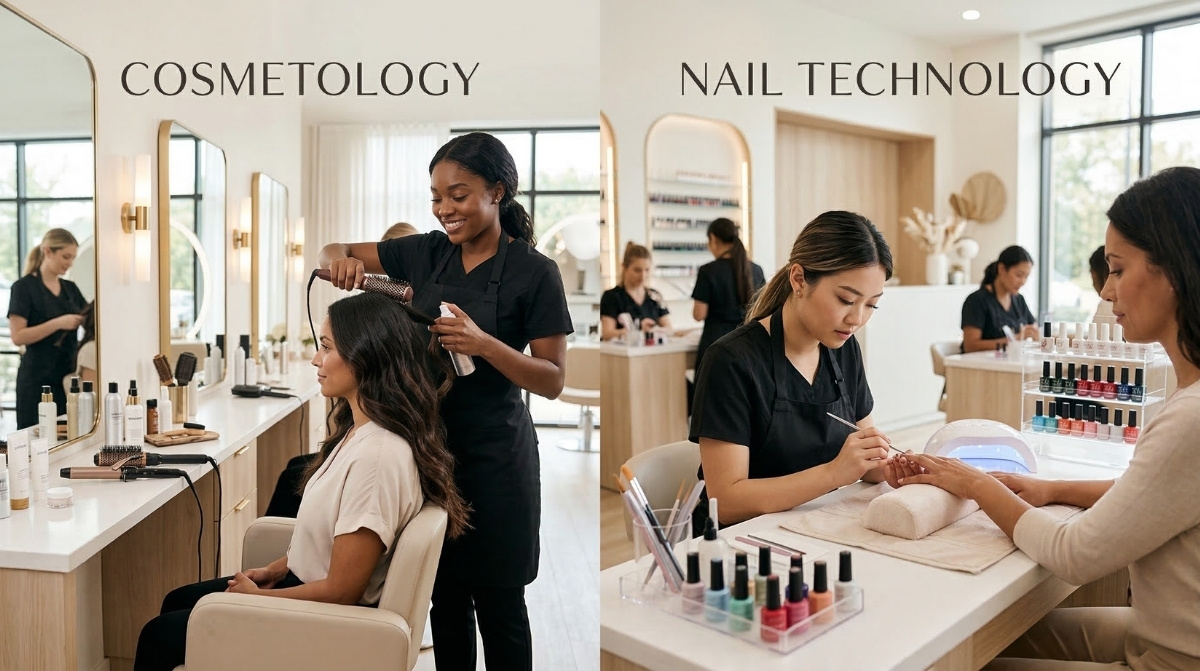
A side-by-side editorial comparison of a cosmetology student styling hair and a nail technician performing detailed nail art in a modern, luxury salon setting.

Defining Your Scope: Generalist vs. Specialist

When I talk to prospective students about the difference between cosmetology and nail technology, I always suggest looking past the services and looking at the lifestyle.

Cosmetology is the broader path. In Arkansas, it involves 1,500 hours of training that covers hair, skin, and nails. I think of this as the ultimate versatility license. It gives you the freedom to change your service menu whenever you want, whether you’re focusing on hair color one year or skincare the next. You get a deep education in the chemistry of hair and the physiology of the skin, making you a well-rounded expert.

On the other hand, a nail technology program is a 600-hour deep dive. You spend your time mastering everything from nail anatomy and product chemistry to advanced artistry and infection control. If you want to see exactly what you’ll be learning in the classroom, you should check out this 2026 guide to your nail technology career, which explains how to get started in the craft.

Expert Insight: The 2026 Regulatory Shield

Beauty professionals are seeing more federal oversight than ever thanks to MoCRA. This law requires manufacturers and distributors to report serious adverse events to the FDA. Meanwhile, OSHA still requires salons to keep Safety Data Sheets for any hazardous chemicals on hand. A professional education helps you navigate these rules so you can protect both yourself and your clients.

The Artist Identity: Credential vs. Career Branding

I believe there is a big difference between being a nail technician or nail artist. Your license gives you the legal right to work, but your branding is what determines your success.

In a professional nail tech program, you don’t just learn how to apply product; you learn the technical reasons why things work. You’ll study how to protect the structural integrity of the nail and how to work with chemicals safely to avoid long-term damage. While a technician provides a standard service, an artist provides a transformation that keeps clients coming back.

For those who prefer the wider range of a cosmetology license, the opportunities go far beyond the salon chair. You can explore careers you can have with a cosmetology license that include things like editorial styling, film work, or becoming a brand educator.

The ROI of Time: Launching Your Business Faster

If your main goal is to get into the workforce as fast as possible, the nail technology program is the clear winner. Because it’s a shorter program, you can often be licensed and working in less than six months. This is a great option for entrepreneurs who want to open their own suite or boutique without committing to a year of school.

However, the variety you get with cosmetology acts as a career safety net. Even if one part of the industry slows down, you have the skills to pivot into another area. It’s all about whether you want to be a specialist or a versatile pro.

A professional beauty expert sitting at a desk planning her career path, featuring a nail technician workspace on one side and cosmetology tools with business textbooks on the other.

Expert Insight: The $9.48 Billion Growth Trend

We are seeing a major trend toward “premium” services right now. According to Technavio’s 2025-2029 Nail Salon Market Report, the specialized nail market is growing at a 10.7% CAGR. Clients are increasingly moving away from general salons in favor of specialty boutiques where they know they are getting expert care.

The Rise of Wellness and Clinical Care

A major factor that sets a professional education apart in 2026 is the focus on nail health. While DIY kits are everywhere, they don’t teach the biological foundation needed to keep nails healthy.

Recent studies show a growing demand for wellness-first protocols. For instance, a 2020 study in Skin Appendage Disorders found that specific strengthening formulas improved nail hardness by 26.7%. Furthermore, recent literature on Advanced Dry Manicure Techniques suggests these methods can reduce risks associated with water soaking, like nail plate expansion. Staying educated on these trends is what makes you a true pro.

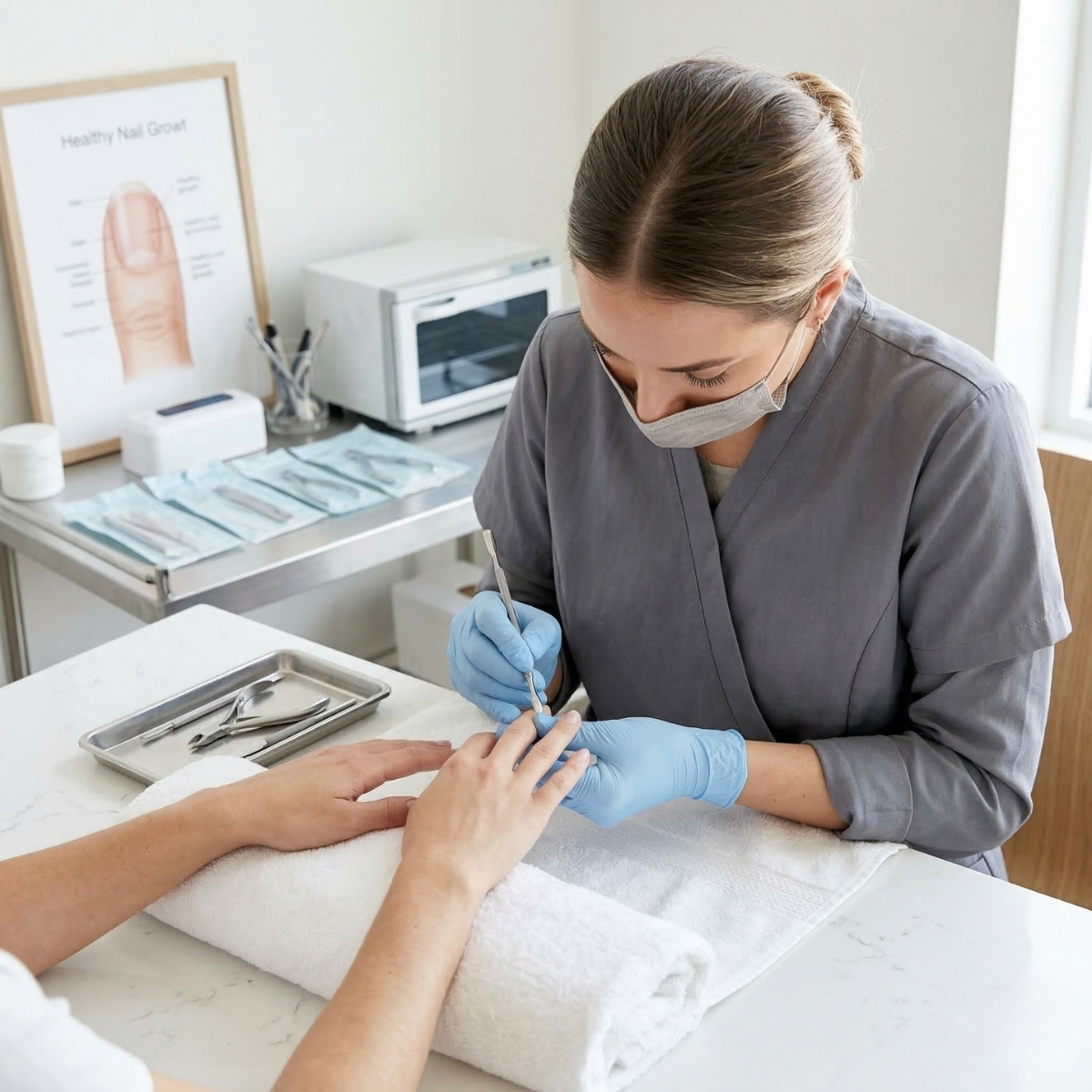
A professional nail technician in a clinical salon wearing a mask and blue gloves, performing a precise manicure focused on nail health and hygiene in a sterile, modern environment.

So Which Path is Yours?

Choosing between a cosmetology or nail technician program is really a choice of where you want to focus your energy.

  • Choose Cosmetology if you want to be a versatile expert who can work in hair, skin, and nails as the market changes.
  • Choose Nail Technology if you love technical details, the science of chemicals, and want to launch a specialized business quickly.

Your future isn’t just about the license you hold – it’s about the mastery you achieve.

Ready to Master Your Craft and Launch Your Legacy?

The beauty industry today needs more than just workers; it needs visionaries. At Career Academy of Hair Design, we don’t just teach you how to pass an exam – we prepare you to lead. Our training is designed to bridge the gap between the classroom and the high-end professional world, immersing you in an environment that meets the highest clinical and professional standards.

When you join us, you’re part of a 20-year legacy of excellence. We offer the mentorship you need to turn your goals into a sustainable, high-growth career.

Find Your Path

Whether you are ready to become a specialized authority or a versatile beauty expert, we have a pathway for you. You can find out more about how to get started in Enrollment. We’d love to show you our facilities and introduce you to the instructors who have been shaping beauty leaders for over two decades.

I’m here to help you take that first step. If you have questions or want to see the campus for yourself, please fill out the contact form below this article and let’s chat!

FAQ: The Professional Reality Check

What happens if I get a Nail Tech license but decide I want to do hair later?
You will usually need to go back and complete a full cosmetology program. While some hours might transfer depending on state board rules, you generally have to learn the hair-specific modules from scratch. This is why I recommend the specialist path only if you’re sure about your focus.

Is the nail market oversaturated in 2026?
The demand for quality services is actually quite high. The U.S. Bureau of Labor Statistics projects 7% growth for the field through 2034. In my experience, specialization and great client service matter far more than how many other salons are nearby.

Does a cosmetology license allow me to work in a medical spa?
It’s a great starting point, but med-spa work is very specific and often requires extra training or separate licensure for things like lasers or medical-grade devices, depending on your state’s medical board regulations.

What Are Manicuring and Nail Technology? A 2026 Guide to Your New Career

The beauty landscape has shifted significantly as we move through 2026. What might have started as a creative hobby at your kitchen table has likely turned into a serious interest in a sustainable career. The industry is no longer viewed as a basic trade; it has matured into a specialized field centered on cosmetic chemistry and the science of hand health.

When I look at what nail technology represents in the modern era, it is clear that we are talking about a high-tech, high-touch profession. Success today requires a deep understanding of human anatomy and chemical polymers. This guide is my way of introducing you to the professional side of the industry, helping you move from a talented enthusiast to a licensed specialist who can command a serious income.

Key Takeaways for Future Professionals

  • Industry Growth: This field is projected to expand by 7% through 2034, earning a Bright Outlook status because high-level manual skills cannot be replaced by AI.
  • Earning Potential: Technicians working in high-end markets are currently seeing rates between $34 and $94 per hour.
  • Safety First: Regulations in 2026 have pushed the industry toward TPO-free and HEMA-free products, making a formal education in toxicology more important than ever.

The Technical Evolution: Where Chemistry Meets Care

To understand the true meaning of nail technology today, I have to look beyond the colors and the art. Modern technicians act as surface chemists. Every service I perform involves a chemical reaction called polymerization on a living substrate. Mastering how UV light works with photoinitiators to create a strong bond without hurting the natural nail is what defines a true professional.

The Professional Role in 2026

If you have wondered what exactly a nail tech does in this new era, I think of us as the primary care providers for the hands. Beyond the aesthetic work, my role involves spotting silent health issues. A professional can see the difference between a minor bruise and subungual melanoma, or identify when a client has a fungal infection that needs a medical referral. Because of this, getting your license is a vital step for public safety.

Expert Insight: The Shift in Toxicology

According to recent updates on the New Rules of Nail Care from StyleSpeak, the global move away from TPO has created a clear line between amateurs and pros. Education in 2026 is about more than just application; it is about knowing how to read a Safety Data Sheet (SDS) to ensure the products you use are biocompatible and safe for everyone involved.

For a deeper look into these technical standards, resources like HONA’s Knowledge Hub can help you master the chemistry side of things before you even step into your first salon.

Choosing Your Path and Understanding the Economy

I find that the distinction between manicuring and nail technology is still frequently misunderstood. In most places, a manicuring license is what gives you the legal right to work. However, your training in nail technology is what gives you a competitive advantage. While basic manicuring covers general maintenance, a nail technologist is focused on engineering structures and protecting the natural nail from trauma.

Longevity for Beginners

When I talk to people starting out, I always emphasize ergonomic longevity. Many self-taught artists have to leave the business early due to physical strain or carpal tunnel. A professional program teaches you the biomechanics of your own body, such as how to hold an e-file and how to sit properly, so you can enjoy a 30-year career instead of burning out in three.

Income and Job Security

Data from the U.S. Bureau of Labor Statistics Occupational Outlook shows that this field has roughly 24,800 annual job openings. This security comes from the fact that high-dexterity roles are nearly impossible for AI to duplicate.

When looking at salary trends, recent data from Indeed shows that standard averages can be misleading. Technicians who focus on medical-grade services or architectural enhancements are finding six-figure potential in busy hubs, with specialized rates reaching between $34 and $94 per hour.

The 2026 Vision: Quiet Luxury and Technology

The dominant look of 2026 has transitioned away from loud art toward Soft Minimalism. As noted in the Vogue Scandinavia report on nail trends, a milky white shade called Cloud Dancer is the color of the year. This trend puts the focus back on natural health and clinical-grade care.

The Role of Digital Tools

Technology has become a silent partner in the salon. According to the SNS Chairs analysis of 2026 market trends, the market for nail printing and AR devices is reaching over $1 billion. Many high-end salons now use Augmented Reality to show a client the final look before the first file is even used, which leads to much higher satisfaction.

Master Your Craft at Beauty Professionals Academy

I know that understanding the future of the industry is one thing, but getting the right foundation is another. At Beauty Professionals Academy, the focus is on a salon-ready approach that prepares you to lead the market rather than just pass an exam.

The school has a 20-year legacy of helping people turn their passion into a professional career. By training in a real-world environment, you will learn the techniques that 2026 clients are actually asking for. You won’t just leave with a license; you will have a portfolio and the business skills needed to reach the highest earning levels in this industry.

If you are ready to find out how to get started, you can find more information on the Enrollment page. I also recommend checking out the contact form we have at the bottom of this article if you want to reach out and ask questions about your future in the beauty niche.

Frequently Asked Questions

Can I do medical manicuring with a standard license?
A standard license covers cosmetic work. To work in a medical capacity, you would need to pursue an Advanced Nail Technician (ANT) certification, which focuses on aseptic techniques for high-risk clients.

How long is a manicuring program in Arkansas?
In Arkansas, the state requires 600 hours of training. At Beauty Professionals Academy, we help you navigate this requirement so you can get licensed and start your career as soon as possible.

Is the market too crowded in 2026?
The low-end market is busy, but there is a major shortage of specialists who understand clean beauty and toxicology. High-end clients are specifically looking for pros who prioritize nail health.

What is the Soft Minimalism trend?
It is a shift toward perfect shaping and architectural integrity. It focuses on the C-curve and clean lines rather than complex painting, making the hand look elegant and healthy.