



Choosing where to launch your beauty career gets confusing fast when everyone in your life has a different opinion. Your family might push hard for a traditional four-year university, while you already know you belong behind a styling chair rather than inside a massive lecture hall. At the same time, committing thousands of dollars to career training brings plenty of hesitation. You want a hands-on, creative career, yet you also want real proof that your classes will actually prepare you for what salon owners and paying clients expect.
Here is what cuts right through the noise: you do not have to go to college for cosmetology in the traditional four-year sense. Whether you enroll at a public community college, a technical center, or a private beauty academy, you still have to complete the licensing requirements set by your state. What changes from one campus to another is the total price tag, your weekly class schedule, the amount of real client practice you get, and the support you receive as you prep for state board exams and your first job.
Key Takeaways
- One State License, Multiple Training Routes: Within a state, students pursuing the same cosmetology license must meet that state’s licensing requirements, whether they attend a community college, technical center, or private academy.
- Training Hours Shape Your Timeline: Beauty programs typically award a postsecondary certificate rather than a bachelor’s degree. Arkansas requires 1,500 hours of cosmetology training.
- Compare Written Program Numbers: Tuition, kit supplies, class schedules, start dates, and total weeks to graduate differ from school to school. Check itemized written quotes instead of assuming one school type is automatically faster or cheaper.
- Verify Approval and Aid Eligibility: Confirm state school approval, current accreditation status, and federal student aid eligibility for your specific program before signing an enrollment contract.
Which Type of Beauty School Fits Your Budget and Schedule?
Once you realize a four-year university degree is unnecessary, your next step is finding a campus that fits your budget and daily life. School labels give you a rough idea of how a campus operates, yet they do not tell you the real cost or how quickly you will finish. Compare the actual cosmetology programs available where you plan to study rather than judging a school solely by its category.
Public Community Colleges
Checking out community colleges with cosmetology programs makes plenty of sense if keeping tuition low is your top priority. Public funding can make in-district tuition more affordable, and certain campuses let you earn an associate degree alongside your beauty training. An associate degree can be worthwhile if you want extra coursework in business or communication, though you should clarify which classes count toward your state licensing hours and which ones only fulfill degree requirements.
Never assume a community college beauty program automatically takes two full years. A certificate track may run on a different schedule from an associate degree, and enrollment dates vary by campus. Ask the admissions team for the published clock hours, weekly class timetable, next available start date, and projected graduation date.
Career and Technical Trade Schools
A technical center or cosmetology trade school may offer a focused curriculum without the general education courses tied to an associate degree. Because these campuses can be public, nonprofit, or private, their tuition rates and weekly schedules do not follow one predictable national standard.
Pay close attention to the daily structure: check how many hours you train each week, how often new cohorts begin, whether evening classes exist, and how much supervised floor time students receive before graduating. A streamlined curriculum only helps you if the schedule and instruction keep you moving steadily toward your state-required hours.
Private Beauty Academies
Private beauty academies may offer start dates and schedules for students who do not want to wait for a traditional college semester. Some private campuses also weave salon consultations, retail product education, client rebooking, and portfolio building into their curriculum. These are features to verify on campus rather than assuming every private school delivers them.
Ask to sit in on a theory class and watch the student clinic floor in action. Notice how instructors give feedback, how frequently students work with live guests, and whether tools and products are readily stocked when needed. A trendy salon floor looks impressive on a brochure, but the quality of daily instruction matters far more.
For broad financial context, Trade-Schools.net’s analysis of NCES data notes average 2023–24 annual tuition and required fees of roughly $4,074 for in-district students at public two-year colleges compared with $16,524 at private for-profit two-year institutions. Those figures represent broad averages across many fields, not an exact price quote for a specific beauty program.
Build your own side-by-side comparison using written figures from each campus. Factor in tuition, registration fees, textbooks, your student kit, uniforms, state board exam fees, commuting costs, and any loan interest. Next, compare weekly schedules. Graduating earlier can help you seek paid work sooner, provided the school’s actual start date, weekly attendance hours, and completion timeline work with your routine.
Is Beauty School Postsecondary Education, and How Does Aid Work?
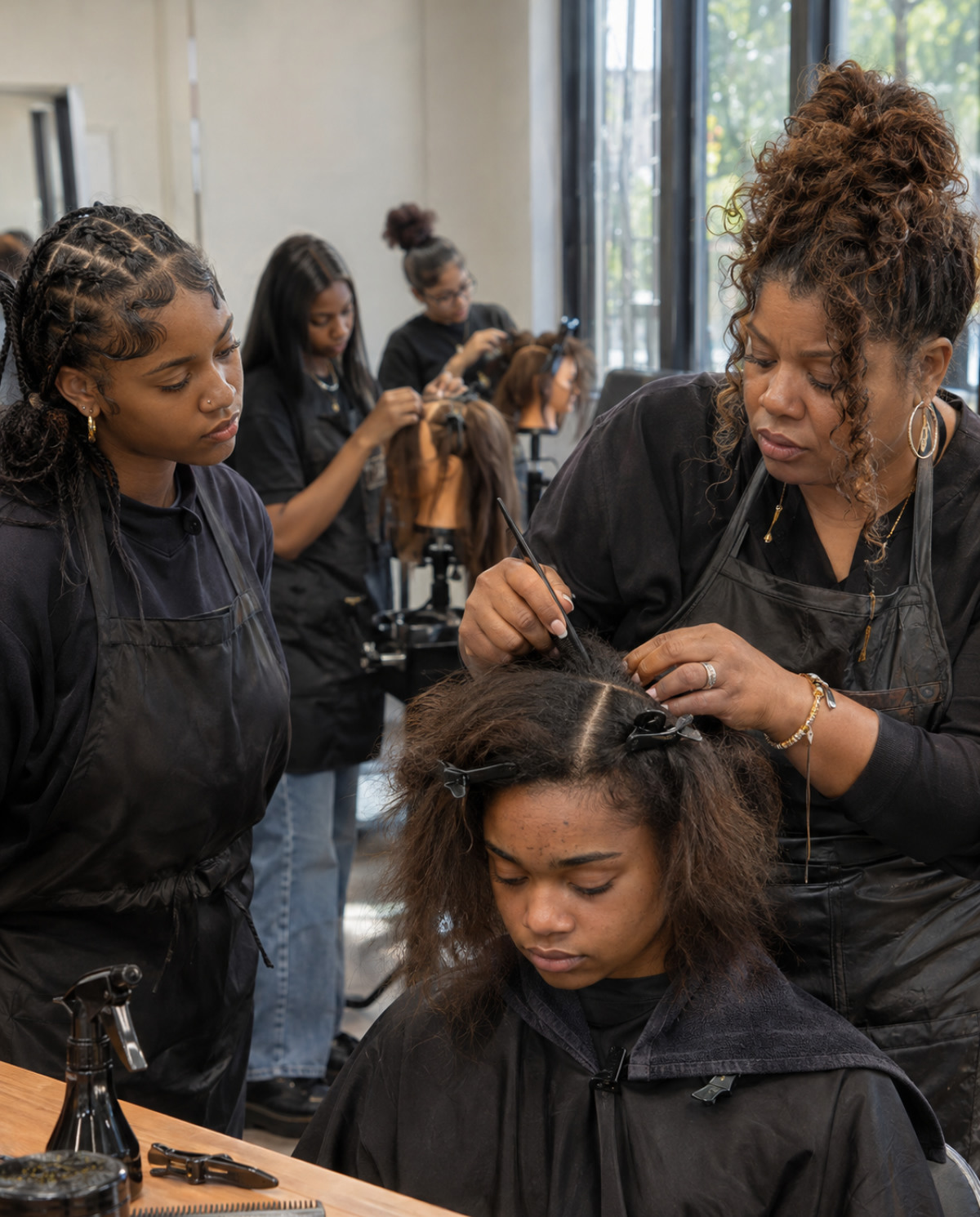
Beauty training can count as postsecondary education without leading to a bachelor’s degree. Most cosmetology programs award a certificate or similar nondegree credential, though some community colleges offer an associate degree path. Whichever path you choose, the training must prepare you to meet your state’s licensing requirements.
Beauty schools often measure progress in clock hours: supervised time spent in classroom theory, practical lessons, and student salon clinics. Rules differ depending on where you live and which license you want. In Arkansas, state cosmetology school rules require 1,500 hours of training across subjects including hygiene and sanitation, related sciences, hairdressing, manicuring, aesthetics, salesmanship, shop management, and professional ethics. Students receive foundational instruction before moving into supervised clinical work. State training hours should not be mistaken for academic credits that will automatically transfer toward a college degree.
Financial aid eligibility comes down to the individual campus, the specific program, and the student. Eligible students enrolling in eligible programs at participating schools can submit the Free Application for Federal Student Aid (FAFSA) to be considered for aid that may include Pell Grants or federal student loans. Filing a FAFSA does not guarantee a specific award. As you plan your budget, a beauty school funding guide covering FAFSA, Pell Grants, 529 plans, and tax credits can help you explore which options may apply to you.
Looking honestly at career data also helps set realistic expectations. According to the U.S. Bureau of Labor Statistics, overall employment for barbers, hairstylists, and cosmetologists is projected to grow 7 percent between 2025 and 2035, with about 80,300 job openings each year on average. Many of those openings are expected to replace workers who leave the occupation rather than represent newly created positions.
The BLS reports a 2025 median annual wage of $35,880 across this combined group. Its wage figures include reported tips but exclude self-employed workers. The agency also estimates that about 48 percent of hairdressers, hairstylists, and cosmetologists were self-employed in 2025. That percentage spans different kinds of independent work and does not show what a new booth renter or suite owner will earn. If working independently is your goal, weigh expected service income against rent, supplies, insurance, taxes, and the time needed to build a steady clientele.
How Can You Verify a School’s Credentials?
Before you fall in love with a student salon floor, verify the school’s official standing. State school approval and accreditation serve different purposes. State approval allows a school to provide training toward that state’s licensing requirements. Accreditation involves external review by an accrediting agency; the U.S. Department of Education recognizes agencies that meet federal standards.
Current accreditation status matters especially if you plan to apply for federal financial aid, though accreditation alone does not make every program eligible for grants or loans. Verify that the institution and your specific program participate in the federal aid programs you intend to use. Accreditation also does not guarantee your training hours will transfer if you switch schools. Transfer decisions depend on the receiving school’s policies and state licensing rules, so request those policies in writing before enrolling.
Start by looking up the exact institution and campus in the Department of Education’s Database of Accredited Postsecondary Institutions and Programs. Check the accreditor and current status, then ask admissions to show proof of state approval and explain which aid programs are available for your course.
Current status deserves particular attention. As Higher Ed Dive reported in October 2026, the Department of Education gave the National Accrediting Commission of Career Arts and Sciences (NACCAS) 12 months to resolve compliance concerns and directed it to suspend reviews of schools and programs seeking new accreditation until it returned to compliance. Roughly 300 reviews were pending as of July. The decision did not automatically revoke accreditation from schools already accredited by NACCAS. If a campus calls itself a candidate for accreditation, ask whether it currently holds accreditation and whether your program is presently eligible for the federal aid you need.
Finally, read the enrollment agreement rather than relying on a verbal summary. Find out what happens if absences push back your graduation date, whether additional training time brings extra charges, and how those charges are calculated. Request the relevant policies and an itemized cost estimate in writing.
What Should You Look for Beyond Licensing Exam Preparation?
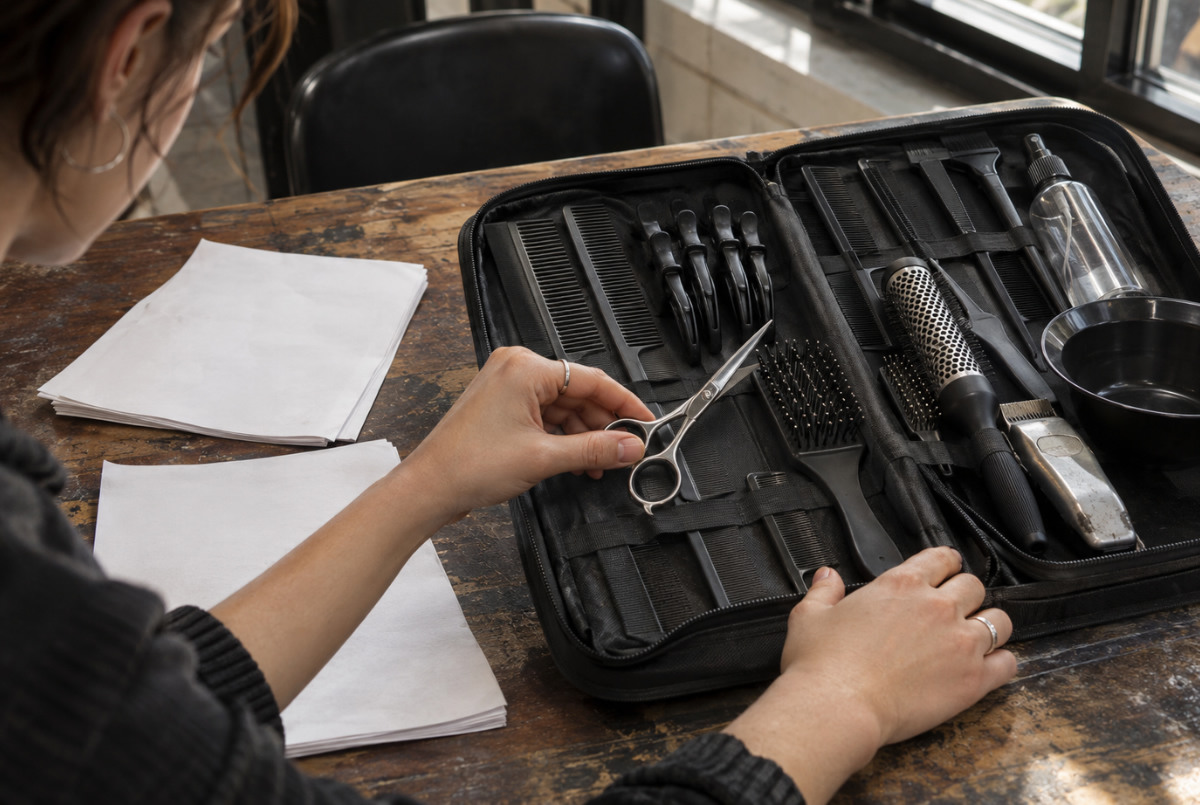
Passing your state board exams is a major milestone, yet a license alone does not show how comfortable you will be consulting with a client, managing an appointment, or adapting techniques to different hair textures. When you compare campuses, look closely at how students practice and how instructors track their progress.
For a closer look at what students learn before getting licensed, start with your state’s curriculum requirements and then ask what additional supervised practice a school provides. In Arkansas, the 1,500-hour cosmetology curriculum includes haircutting, coloring, chemical services, scalp care, facials, hair removal, and nail care. Students receive classroom instruction before taking on clinical services under instructor supervision.
A campus tour should show you how classroom lessons translate to the salon floor. Watch whether students consult with guests before services, receive instructor feedback during appointments, and practice across different hair textures and skin tones. Ask how instructors teach sanitation, chemical service decisions, and when a client concern calls for referral to a medical professional rather than a salon treatment.
Business habits deserve attention too. Check whether students learn to explain a service plan, estimate appointment time and cost, photograph work with client permission, recommend appropriate home care, and invite satisfied guests to rebook. Ask to see where these skills appear in the course materials or observe how they are practiced in the clinic.
It also pays to check whether instruction reflects the work students will encounter after graduation. New America’s reporting on beauty education describes student concerns at some schools about outdated materials and limited instruction in textured hair and contemporary color. Those concerns do not describe every campus, but they give you useful things to examine: current lessons, available supplies, instructor feedback, and actual clinic experience.
Which Questions Should You Bring to a Campus Tour?
An admissions visit can feel overwhelming when you are eager to begin. Bring a written list so you can collect details that are easy to compare across schools.
- What is the complete program cost? Request an itemized breakdown of tuition, registration fees, books, your student kit, uniforms, supplies, graduation charges, and licensing exam fees.
- What schedule would I attend? Confirm weekly training hours, the next start date, your expected completion date, and how missed hours are made up.
- What if I finish after my contract end date? Request the attendance policy and any additional charges in writing.
- What are your recent completion and licensing exam results? Ask for the reporting period, number of students included, and whether exam results reflect first-time attempts.
- When do students begin serving guests? Find out how beginners prepare for clinical work, how appointments are supervised, and how instructors provide feedback.
- What do students practice beyond licensing basics? Ask about textured hair, contemporary color, consultations, sanitation, service pricing, and client retention.
- Which aid programs are available for this exact course? Confirm federal aid participation, request an individual aid estimate, and ask what you would still owe.
- What support do graduates receive? Ask about salon visits, career fairs, working interview preparation, and how the school reports placement results.
While touring, inspect an actual student kit and ask which items you would have to replace at your own expense. For another point of comparison, Federal Student Aid recommends reviewing school cost, debt, and outcome information through College Scorecard alongside the program-specific figures admissions provides.
Questions Students Often Ask Before Enrolling
Can an Arkansas cosmetology license help me work in another state?
Each destination state sets its own licensing rules, so contact its board before making plans. If you already hold an active license from another state and want to practice in Arkansas, the requirements depend on your credentials. Arkansas’s reciprocity rule provides a route for applicants with a current out-of-state license who passed a comparable examination; they must also pass an Arkansas law examination. The rule separately addresses applicants who completed training elsewhere and those who need to finish partial training hours. Ask the Arkansas Department of Health which route applies to your records. If you move before graduating, ask the receiving school and state licensing authority how they will evaluate your unfinished hours.
How do I choose between cosmetology, aesthetics, and manicuring?
Match your license to the services you want to perform. Cosmetology training covers hair services along with specified skin and nail work, while aesthetics and manicuring have their own scopes and licensing paths. If your main interest is skincare, a dedicated aesthetics program may be a more direct fit. In Arkansas, aesthetics and manicuring programs each require 600 training hours, compared with 1,500 hours for cosmetology. Compare actual tuition and kit costs before assuming a shorter program will cost less.
What might a salon assess when hiring a new graduate?
Hiring practices differ by salon. A working interview may give you a chance to demonstrate sanitation, technical skills, guest consultation, and how you respond to feedback. Ask each school how it helps students prepare for interviews and whether you can build a portfolio of work you have permission to share.
Can I train part-time while keeping my job?
Some beauty schools offer evening or part-time schedules, but availability depends on the campus and program. Fewer scheduled hours per week generally extend the time needed to graduate. For example, 1,500 hours at 20 hours per week requires at least 75 weeks, while 35 hours per week requires about 43 weeks, before breaks, closures, absences, or other schedule rules. Reviewing training hours, schedules, and common graduation delays can help you choose a pace you can maintain.
Explore Cosmetology Training at Career Academy
Starting a career in beauty begins with finding training that meets Arkansas licensing requirements and helps you build practical salon skills. At Career Academy of Hair Design, you can tour a campus, see the classrooms and student salon floor, and discuss the program with the admissions team. Visit the Enrollment page to review the admission process and ask about upcoming start dates, or use the contact form below to arrange a campus visit.