


What Are Manicuring and Nail Technology? A 2026 Guide to Your New Career
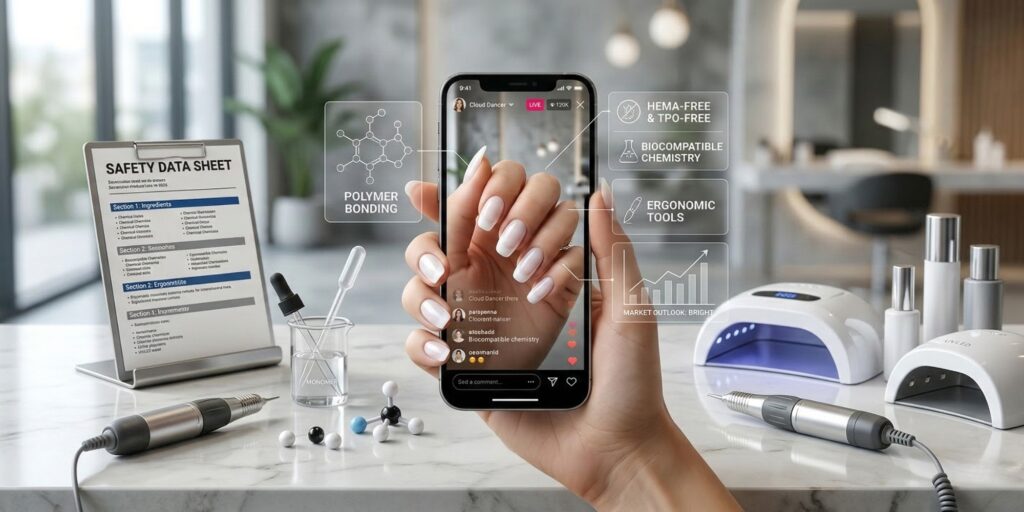
The beauty landscape has shifted significantly as we move through 2026. What might have started as a creative hobby at your kitchen table has likely turned into a serious interest in a sustainable career. The industry is no longer viewed as a basic trade; it has matured into a specialized field centered on cosmetic chemistry and the science of hand health.
When I look at what nail technology represents in the modern era, it is clear that we are talking about a high-tech, high-touch profession. Success today requires a deep understanding of human anatomy and chemical polymers. This guide is my way of introducing you to the professional side of the industry, helping you move from a talented enthusiast to a licensed specialist who can command a serious income.
Key Takeaways for Future Professionals
- Industry Growth: This field is projected to expand by 7% through 2034, earning a Bright Outlook status because high-level manual skills cannot be replaced by AI.
- Earning Potential: Technicians working in high-end markets are currently seeing rates between $34 and $94 per hour.
- Safety First: Regulations in 2026 have pushed the industry toward TPO-free and HEMA-free products, making a formal education in toxicology more important than ever.
The Technical Evolution: Where Chemistry Meets Care
To understand the true meaning of nail technology today, I have to look beyond the colors and the art. Modern technicians act as surface chemists. Every service I perform involves a chemical reaction called polymerization on a living substrate. Mastering how UV light works with photoinitiators to create a strong bond without hurting the natural nail is what defines a true professional.
The Professional Role in 2026
If you have wondered what exactly a nail tech does in this new era, I think of us as the primary care providers for the hands. Beyond the aesthetic work, my role involves spotting silent health issues. A professional can see the difference between a minor bruise and subungual melanoma, or identify when a client has a fungal infection that needs a medical referral. Because of this, getting your license is a vital step for public safety.
Expert Insight: The Shift in Toxicology
According to recent updates on the New Rules of Nail Care from StyleSpeak, the global move away from TPO has created a clear line between amateurs and pros. Education in 2026 is about more than just application; it is about knowing how to read a Safety Data Sheet (SDS) to ensure the products you use are biocompatible and safe for everyone involved.
For a deeper look into these technical standards, resources like HONA’s Knowledge Hub can help you master the chemistry side of things before you even step into your first salon.
Choosing Your Path and Understanding the Economy
I find that the distinction between manicuring and nail technology is still frequently misunderstood. In most places, a manicuring license is what gives you the legal right to work. However, your training in nail technology is what gives you a competitive advantage. While basic manicuring covers general maintenance, a nail technologist is focused on engineering structures and protecting the natural nail from trauma.
Longevity for Beginners
When I talk to people starting out, I always emphasize ergonomic longevity. Many self-taught artists have to leave the business early due to physical strain or carpal tunnel. A professional program teaches you the biomechanics of your own body, such as how to hold an e-file and how to sit properly, so you can enjoy a 30-year career instead of burning out in three.
Income and Job Security
Data from the U.S. Bureau of Labor Statistics Occupational Outlook shows that this field has roughly 24,800 annual job openings. This security comes from the fact that high-dexterity roles are nearly impossible for AI to duplicate.
When looking at salary trends, recent data from Indeed shows that standard averages can be misleading. Technicians who focus on medical-grade services or architectural enhancements are finding six-figure potential in busy hubs, with specialized rates reaching between $34 and $94 per hour.
The 2026 Vision: Quiet Luxury and Technology
The dominant look of 2026 has transitioned away from loud art toward Soft Minimalism. As noted in the Vogue Scandinavia report on nail trends, a milky white shade called Cloud Dancer is the color of the year. This trend puts the focus back on natural health and clinical-grade care.
The Role of Digital Tools
Technology has become a silent partner in the salon. According to the SNS Chairs analysis of 2026 market trends, the market for nail printing and AR devices is reaching over $1 billion. Many high-end salons now use Augmented Reality to show a client the final look before the first file is even used, which leads to much higher satisfaction.
Master Your Craft at Beauty Professionals Academy
I know that understanding the future of the industry is one thing, but getting the right foundation is another. At Beauty Professionals Academy, the focus is on a salon-ready approach that prepares you to lead the market rather than just pass an exam.
The school has a 20-year legacy of helping people turn their passion into a professional career. By training in a real-world environment, you will learn the techniques that 2026 clients are actually asking for. You won't just leave with a license; you will have a portfolio and the business skills needed to reach the highest earning levels in this industry.
If you are ready to find out how to get started, you can find more information on the Enrollment page. I also recommend checking out the contact form we have at the bottom of this article if you want to reach out and ask questions about your future in the beauty niche.
Frequently Asked Questions
Can I do medical manicuring with a standard license?
A standard license covers cosmetic work. To work in a medical capacity, you would need to pursue an Advanced Nail Technician (ANT) certification, which focuses on aseptic techniques for high-risk clients.
How long is a manicuring program in Arkansas?
In Arkansas, the state requires 600 hours of training. At Beauty Professionals Academy, we help you navigate this requirement so you can get licensed and start your career as soon as possible.
Is the market too crowded in 2026?
The low-end market is busy, but there is a major shortage of specialists who understand clean beauty and toxicology. High-end clients are specifically looking for pros who prioritize nail health.
What is the Soft Minimalism trend?
It is a shift toward perfect shaping and architectural integrity. It focuses on the C-curve and clean lines rather than complex painting, making the hand look elegant and healthy.