


Nail Tech Program vs. Cosmetology: Understanding the Key Differences for Your Future

Starting a career in the beauty industry is an exciting move, but I know it can also feel a bit overwhelming when you're trying to figure out which license actually fits your goals. Are you someone who wants to be a master of everything beauty-related, or do you have a specific eye for detail that draws you toward one craft? In 2026, being successful in this field is all about technical skill and a solid understanding of professional standards, so picking the right education path is the first real step in building your brand.
Whether you're dreaming of opening a high-end studio or working behind a chair in a busy salon, the choice between a cosmetology or nail technician program really comes down to how you want your daily work life to look.
Key Takeaways for Your Career
- Speed to Market: If you're looking to start earning quickly, a nail technology program is often the fastest route. In Arkansas, this requires 600 hours of focused training.
- Market Resilience: The demand for specialized nail services is booming, with a 10.7% CAGR that shows no signs of slowing down (Technavio, 2025).
- Safety and Standards: Professional schooling is vital for learning chemical safety and sanitation. With new federal oversight like MoCRA, staying compliant is a major part of being a reliable professional.
- Specialization Payoff: Focusing on a niche often allows you to command higher prices and build a more loyal client base.
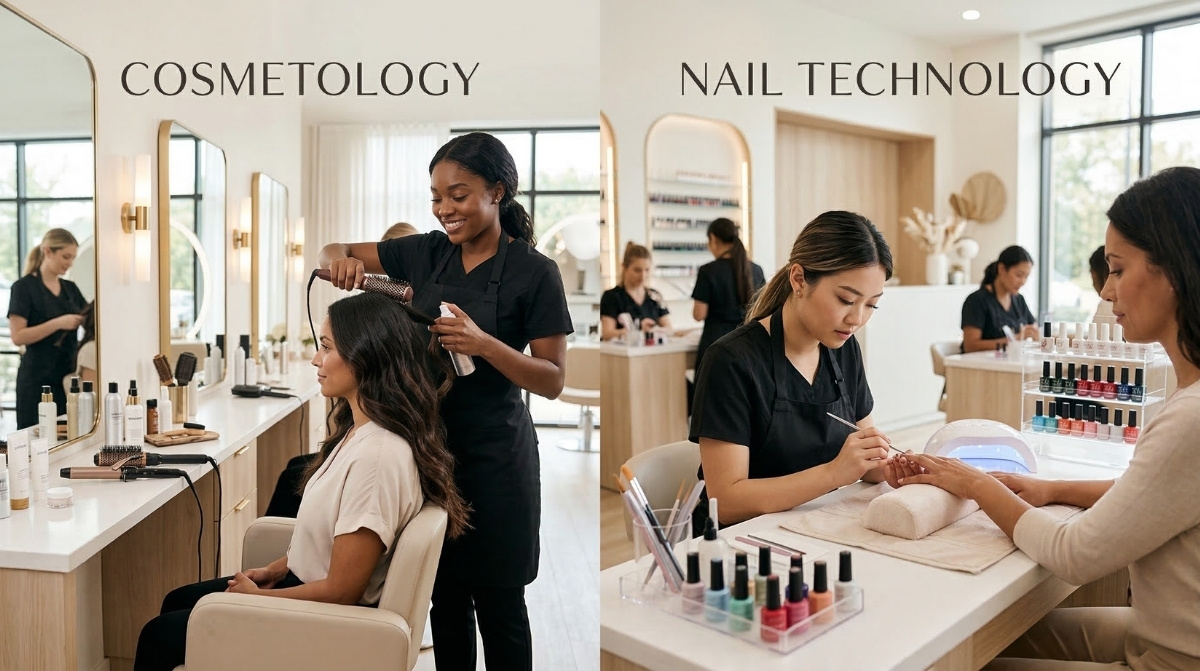
Defining Your Scope: Generalist vs. Specialist
When I talk to prospective students about the difference between cosmetology and nail technology, I always suggest looking past the services and looking at the lifestyle.
Cosmetology is the broader path. In Arkansas, it involves 1,500 hours of training that covers hair, skin, and nails. I think of this as the ultimate versatility license. It gives you the freedom to change your service menu whenever you want, whether you're focusing on hair color one year or skincare the next. You get a deep education in the chemistry of hair and the physiology of the skin, making you a well-rounded expert.
On the other hand, a nail technology program is a 600-hour deep dive. You spend your time mastering everything from nail anatomy and product chemistry to advanced artistry and infection control. If you want to see exactly what you'll be learning in the classroom, you should check out this 2026 guide to your nail technology career, which explains how to get started in the craft.
Expert Insight: The 2026 Regulatory Shield
Beauty professionals are seeing more federal oversight than ever thanks to MoCRA. This law requires manufacturers and distributors to report serious adverse events to the FDA. Meanwhile, OSHA still requires salons to keep Safety Data Sheets for any hazardous chemicals on hand. A professional education helps you navigate these rules so you can protect both yourself and your clients.
The Artist Identity: Credential vs. Career Branding
I believe there is a big difference between being a nail technician or nail artist. Your license gives you the legal right to work, but your branding is what determines your success.
In a professional nail tech program, you don't just learn how to apply product; you learn the technical reasons why things work. You’ll study how to protect the structural integrity of the nail and how to work with chemicals safely to avoid long-term damage. While a technician provides a standard service, an artist provides a transformation that keeps clients coming back.
For those who prefer the wider range of a cosmetology license, the opportunities go far beyond the salon chair. You can explore careers you can have with a cosmetology license that include things like editorial styling, film work, or becoming a brand educator.
The ROI of Time: Launching Your Business Faster
If your main goal is to get into the workforce as fast as possible, the nail technology program is the clear winner. Because it’s a shorter program, you can often be licensed and working in less than six months. This is a great option for entrepreneurs who want to open their own suite or boutique without committing to a year of school.
However, the variety you get with cosmetology acts as a career safety net. Even if one part of the industry slows down, you have the skills to pivot into another area. It’s all about whether you want to be a specialist or a versatile pro.

Expert Insight: The $9.48 Billion Growth Trend
We are seeing a major trend toward "premium" services right now. According to Technavio’s 2025-2029 Nail Salon Market Report, the specialized nail market is growing at a 10.7% CAGR. Clients are increasingly moving away from general salons in favor of specialty boutiques where they know they are getting expert care.
The Rise of Wellness and Clinical Care
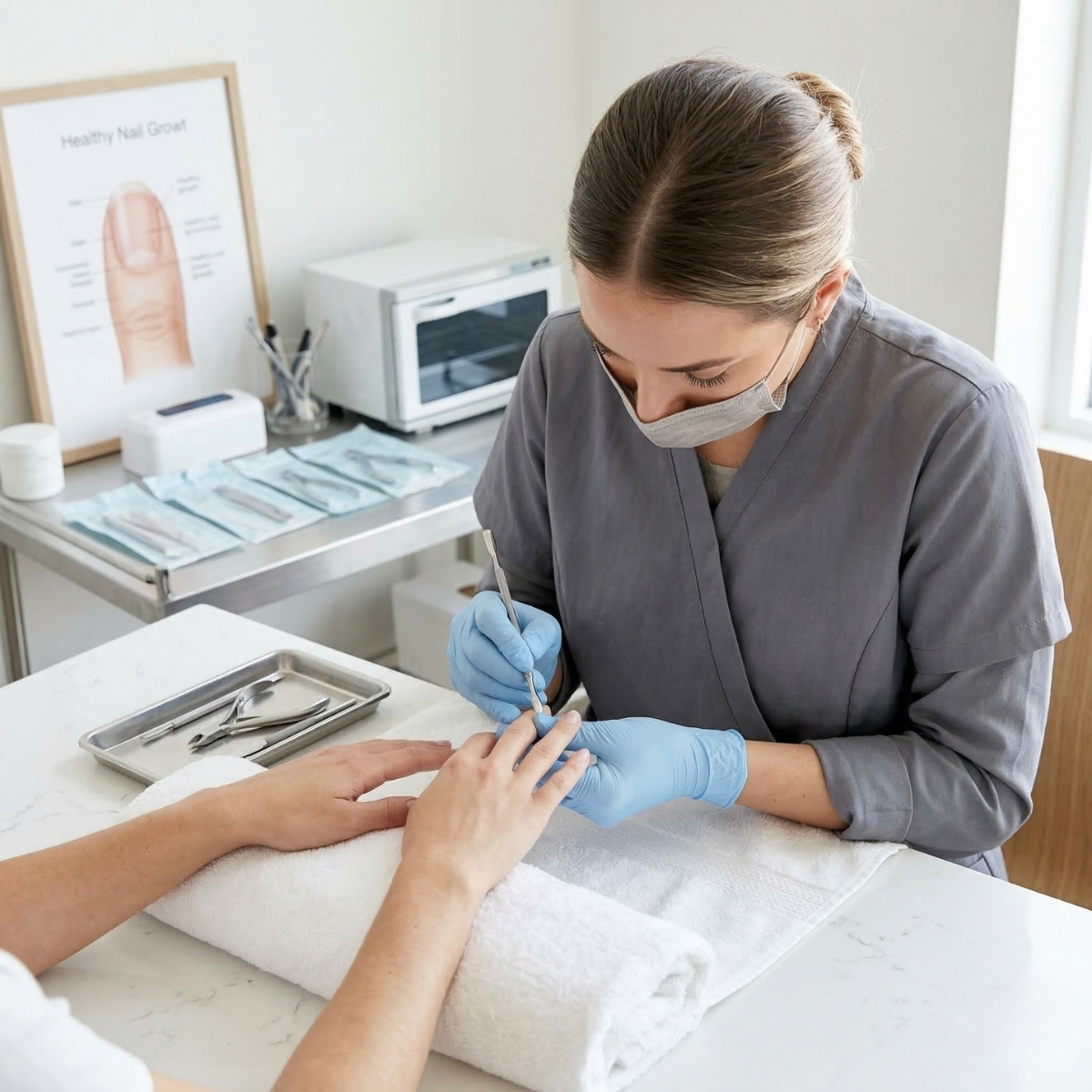
A major factor that sets a professional education apart in 2026 is the focus on nail health. While DIY kits are everywhere, they don't teach the biological foundation needed to keep nails healthy.
Recent studies show a growing demand for wellness-first protocols. For instance, a 2020 study in Skin Appendage Disorders found that specific strengthening formulas improved nail hardness by 26.7%. Furthermore, recent literature on Advanced Dry Manicure Techniques suggests these methods can reduce risks associated with water soaking, like nail plate expansion. Staying educated on these trends is what makes you a true pro.
So Which Path is Yours?
Choosing between a cosmetology or nail technician program is really a choice of where you want to focus your energy.
- Choose Cosmetology if you want to be a versatile expert who can work in hair, skin, and nails as the market changes.
- Choose Nail Technology if you love technical details, the science of chemicals, and want to launch a specialized business quickly.
Your future isn't just about the license you hold - it’s about the mastery you achieve.
Ready to Master Your Craft and Launch Your Legacy?
The beauty industry today needs more than just workers; it needs visionaries. At Career Academy of Hair Design, we don’t just teach you how to pass an exam - we prepare you to lead. Our training is designed to bridge the gap between the classroom and the high-end professional world, immersing you in an environment that meets the highest clinical and professional standards.
When you join us, you’re part of a 20-year legacy of excellence. We offer the mentorship you need to turn your goals into a sustainable, high-growth career.
Find Your Path
Whether you are ready to become a specialized authority or a versatile beauty expert, we have a pathway for you. You can find out more about how to get started in Enrollment. We’d love to show you our facilities and introduce you to the instructors who have been shaping beauty leaders for over two decades.
I’m here to help you take that first step. If you have questions or want to see the campus for yourself, please fill out the contact form below this article and let's chat!
FAQ: The Professional Reality Check
What happens if I get a Nail Tech license but decide I want to do hair later?
You will usually need to go back and complete a full cosmetology program. While some hours might transfer depending on state board rules, you generally have to learn the hair-specific modules from scratch. This is why I recommend the specialist path only if you're sure about your focus.
Is the nail market oversaturated in 2026?
The demand for quality services is actually quite high. The U.S. Bureau of Labor Statistics projects 7% growth for the field through 2034. In my experience, specialization and great client service matter far more than how many other salons are nearby.
Does a cosmetology license allow me to work in a medical spa?
It’s a great starting point, but med-spa work is very specific and often requires extra training or separate licensure for things like lasers or medical-grade devices, depending on your state's medical board regulations.