


If you have ever spent hours scrolling through forums trying to figure out how to work in beauty without a license, I know exactly how you feel. It is not that you are trying to be reckless – you are just trying to be practical.
Maybe you need to start making money right now, or maybe the cost of school feels like a massive hurdle. Or, if you are like a lot of people I talk to, you are just tired of getting conflicting answers. One person says you can do makeup for weddings without a permit, and the next person says you will get fined thousands of dollars.
I want to clear the air. I will break down what a “license” actually means in the beauty world, where the legal boundaries are, and which cosmetology jobs without license requirements are actually safe for you to pursue today.
License vs Certification vs Business Permit: Knowing the Difference
This is the number one thing that trips people up. If you do not get this right, you might end up paying for a “certificate” that does not actually let you work legally.
The Professional License
Think of this as your legal “hall pass” from the state. States require this because beauty services involve chemicals, sharp tools, and sanitation risks. If you are doing something that could potentially cause an infection or a chemical burn, the state wants to make sure you have been trained to prevent that.
The Certification
A certificate just proves you took a specific class – like a weekend course on a new lash brand. While I think certifications are great for building your skills, they do not replace a state license. Having a certificate but no license is like having a trophy for a race you were never legally allowed to enter.
The Business License
This is just for the “business” side of things – taxes, zoning, and permission to sell products. Even if you find a job that does not require a personal license, you will likely still need a business license if you plan on taking money from clients or selling retail.
A simple way to remember it: license = permission to perform, certification = proof of skill, and business license = permission to operate.
How the State Decides What is “Illegal”
Most regulations are based on risk. If a service stays on the very surface of the skin or hair and does not use heavy chemicals, it is often less restricted.
You generally need a license if you are:
- Cutting or trimming hair
- Using professional chemicals (like hair dye, relaxers, or high-level acid peels)
- Using tools that could break the skin or cause infection
- Anything involving sanitation-heavy procedures
This is why advice online is so messy. Two people can swear opposite things and still both be correct – they are just in different states.
Beauty Careers You Can Start Without a License
If your main goal is to get your foot in the door and start earning, there are actually quite a few paths that do not require you to perform regulated services.
The “Non-Service” Side of Beauty
These roles are incredible for networking. I always tell people that the best way to learn how a salon runs is to work in one, even if you are not behind the chair yet.
- Beauty retail and high-end product sales
- Salon front desk or booking coordinator (this is a goldmine for learning business management)
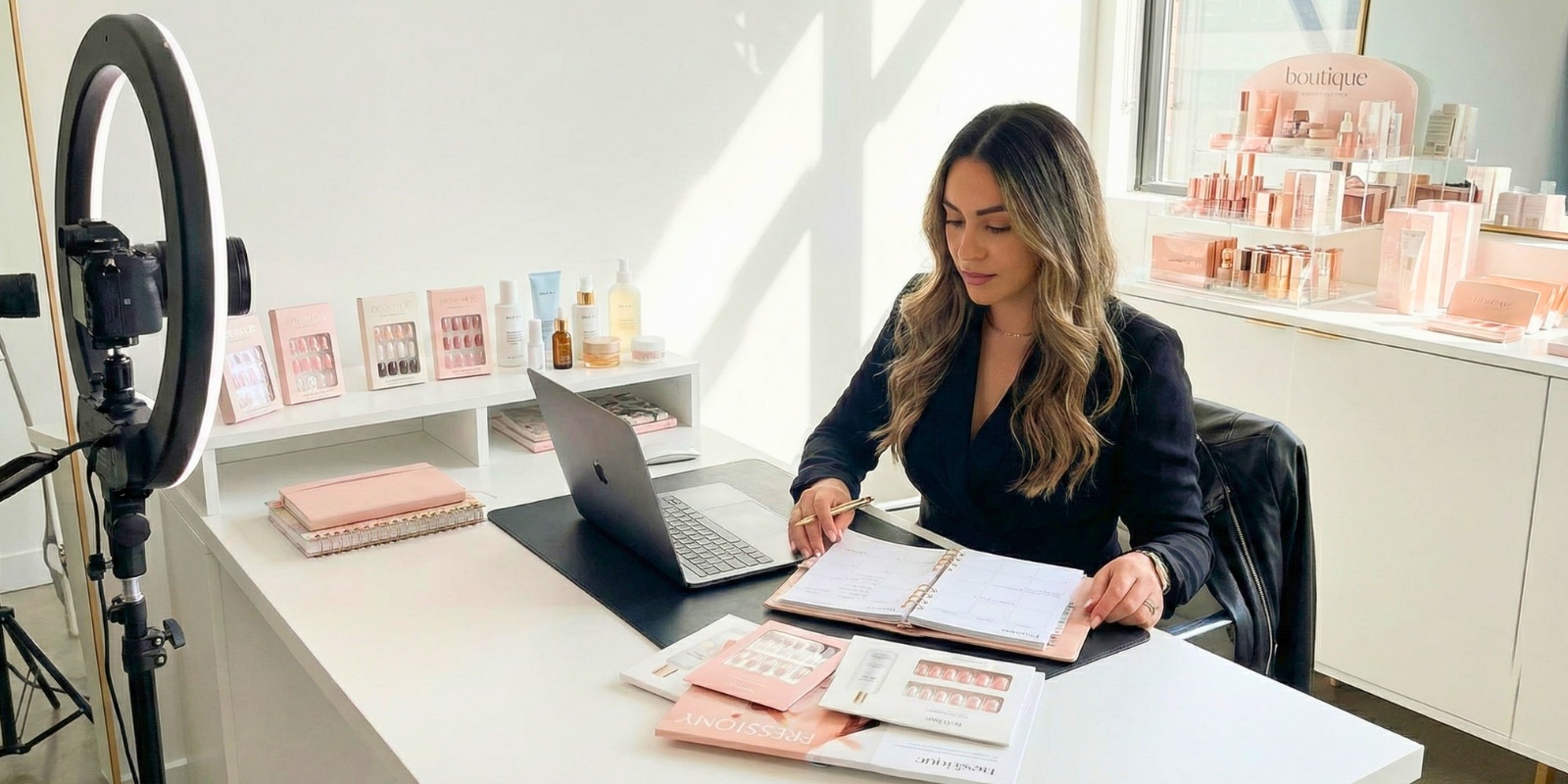
- Social media content creation (doing reviews, tutorials, or “get ready with me” videos)
- Beauty writing for blogs or newsletters
- Product consulting (helping people pick out a skincare routine without actually applying the products to them)
Starting a Product-Based Business
If you want to be your own boss right away, focusing on products is usually much safer than services:
- Creating your own line of press-on nails
- Selling beauty accessories or tools
- Curating and reselling professional products (as long as you have the right permits)
- Digital products like “how-to” guides or beauty planners
Can You Own a Salon Without Being Licensed?
The answer is usually yes. In many places, you can be the owner and the “brains” of the operation without having a license yourself.
The key is how you structure it:
- Licensed professionals must perform the actual hair, skin, and nail work
- The facility may need an establishment or salon license
- Local permits (business, zoning, health/safety requirements) still apply
- You are responsible for keeping the business compliant, even if you are not the one doing services
So yes, ownership is a real path – just not a “do whatever you want” path.
Navigating Specific Services: Where is the Line?
When people ask me about “cosmetology without a license,” they are usually thinking of one specific skill. Here is how the legal side usually plays out:
Lashes and Nails
I see people asking “can I be a lash tech without a cosmetology license” or “can I do lashes without a cosmetology license” every single week. Because lash extensions involve glue very close to the eye, most states regulate this strictly. It is the same for nails. If you are wondering “can I be a nail tech without a cosmetology license” or “can I do nails without a cosmetology license,” the answer is almost always that you need a license to work on a paying client.
Makeup Artistry
This is the “grayest” area. Can you do makeup without a cosmetology license? In many places, you can do “dry” makeup (no skincare treatments) for weddings or photoshoots. But the second you start doing facials or brow waxing, you have crossed into licensed territory.
Hair and Barbering
If you are asking “can you be a barber without a cosmetology license,” the answer is usually no if you are cutting or shaving. Generally, doing hair without a cosmetology license is a quick way to get a “cease and desist” letter if you are performing regulated services.
Microblading
Can you do microblading without a cosmetology license? This is often handled by health departments rather than beauty boards because it involves needles. You usually need a specialized “Body Art” or “Permanent Makeup” license instead.
How to Stay on the Safe Side
If you want to build a long-term career without the fear of being shut down, follow these steps:
1) Be specific
“Doing hair” is too broad. Ask the board about “braiding” or “styling.”
2) Contact the right authority
In Arkansas, for example, you would look at the Arkansas Department of Health – Cosmetology Section.
3) Build your brand legally
Start by selling products or creating content. This builds a client base that will be ready for you the moment you finish school.